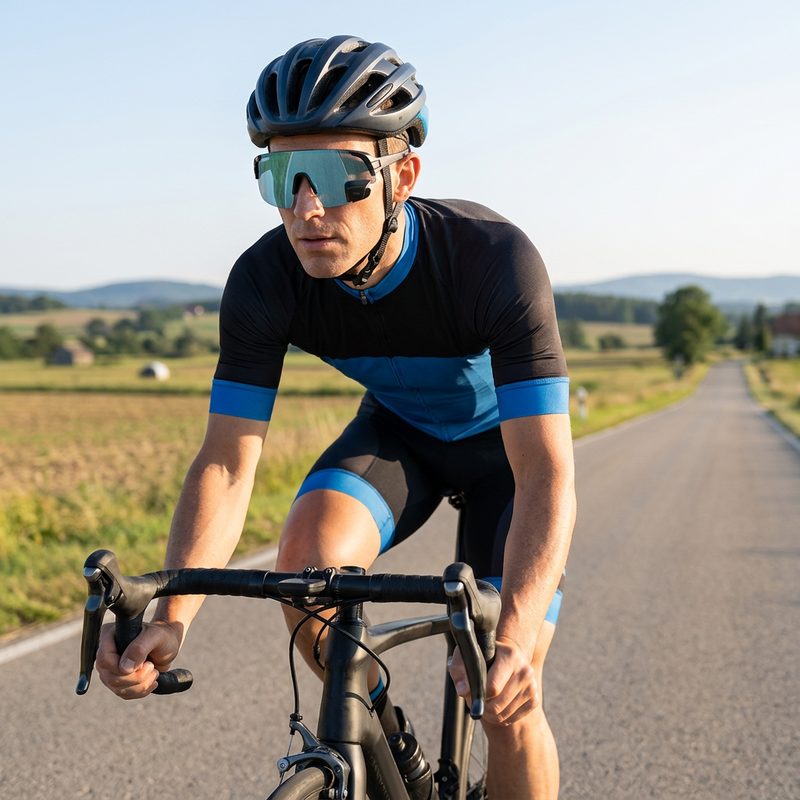
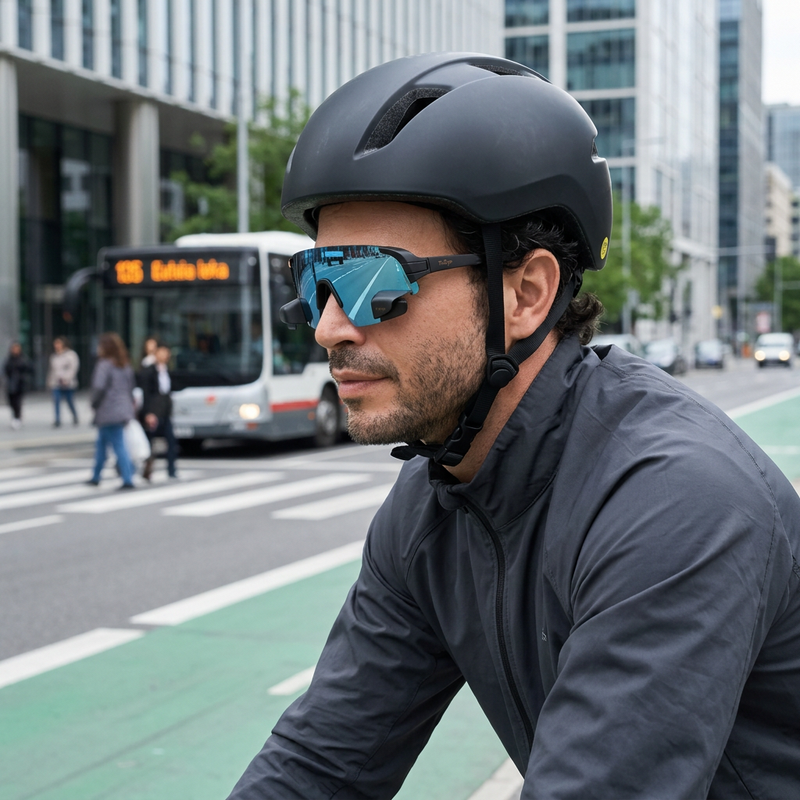
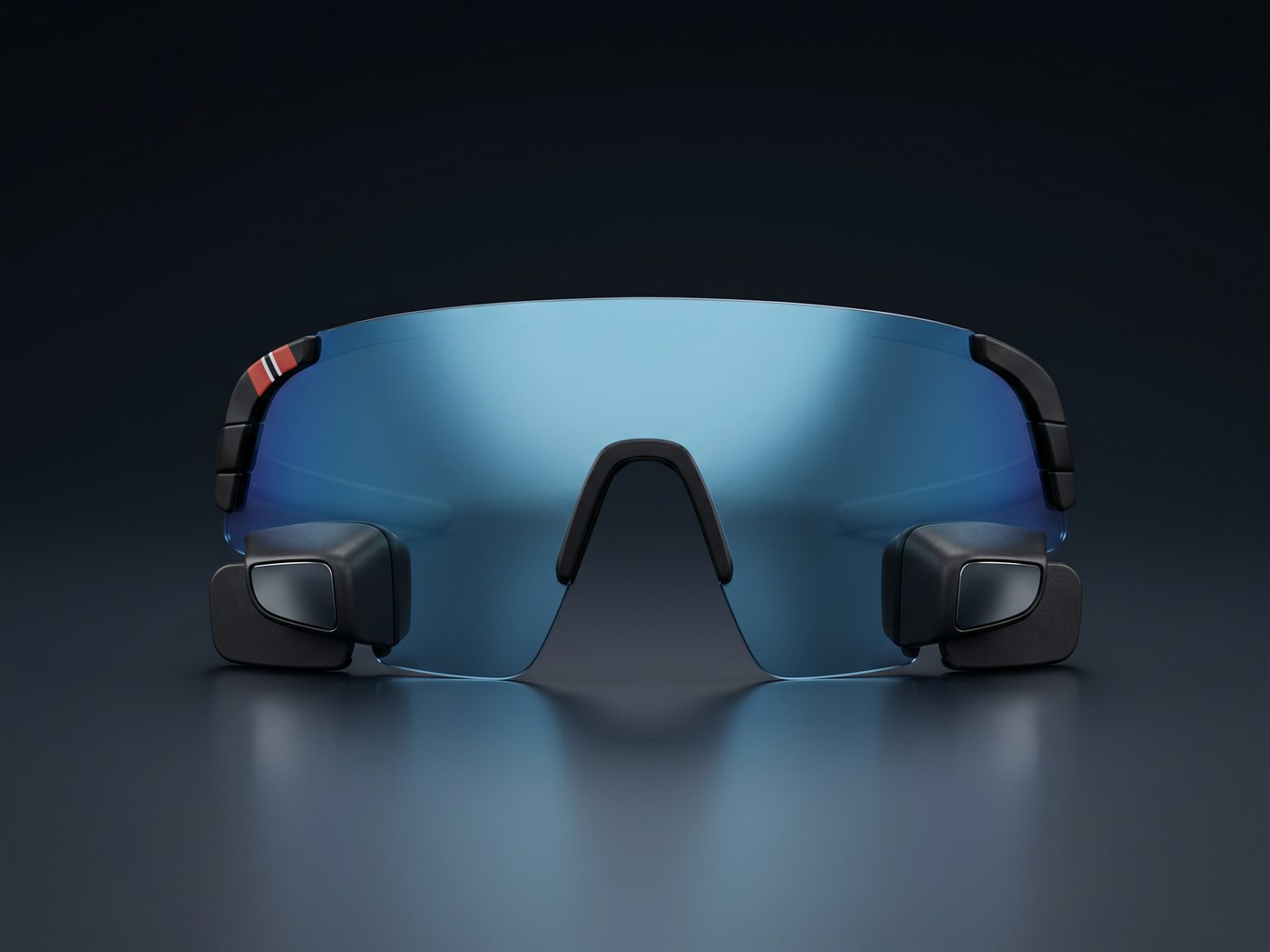
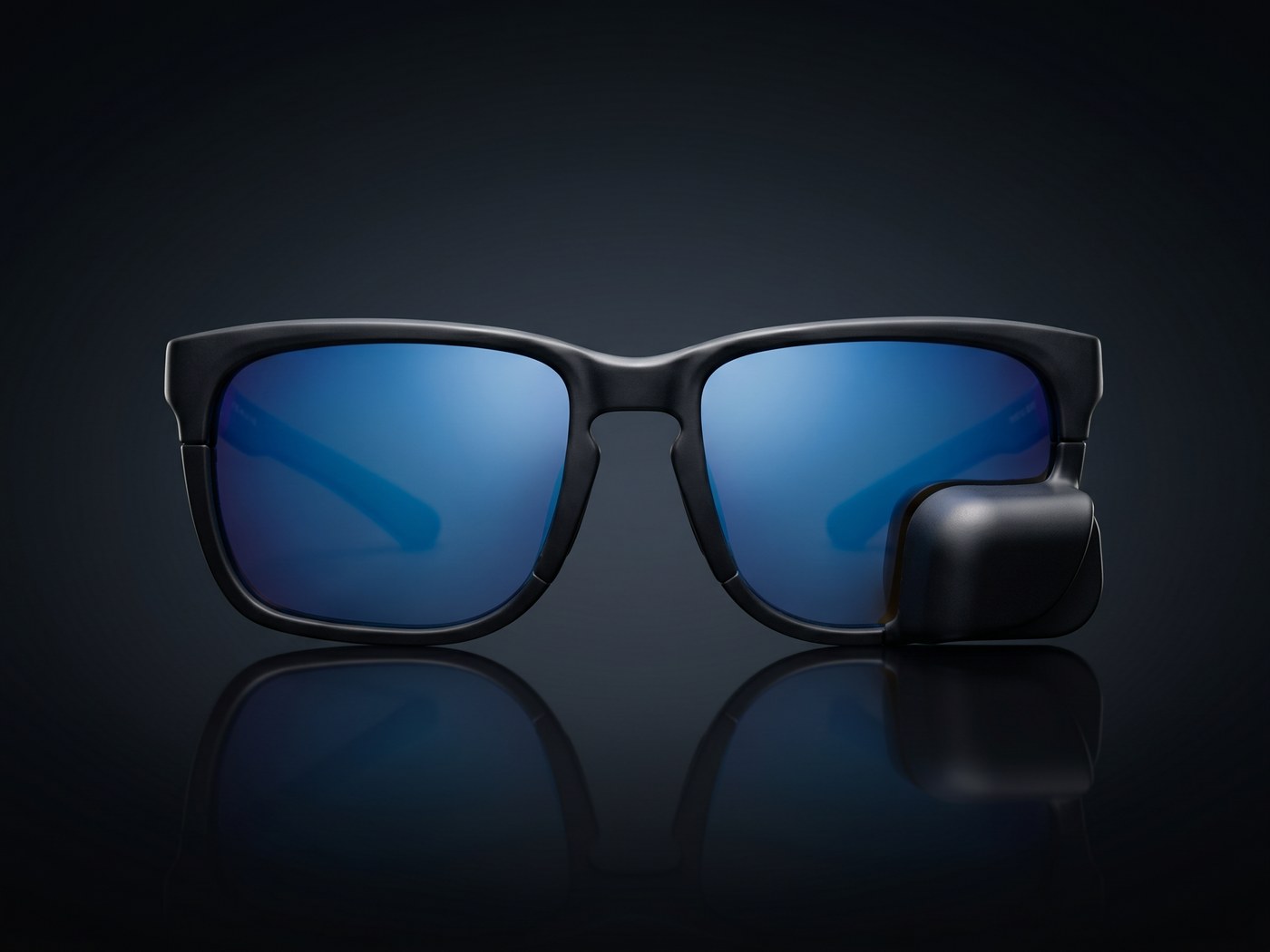
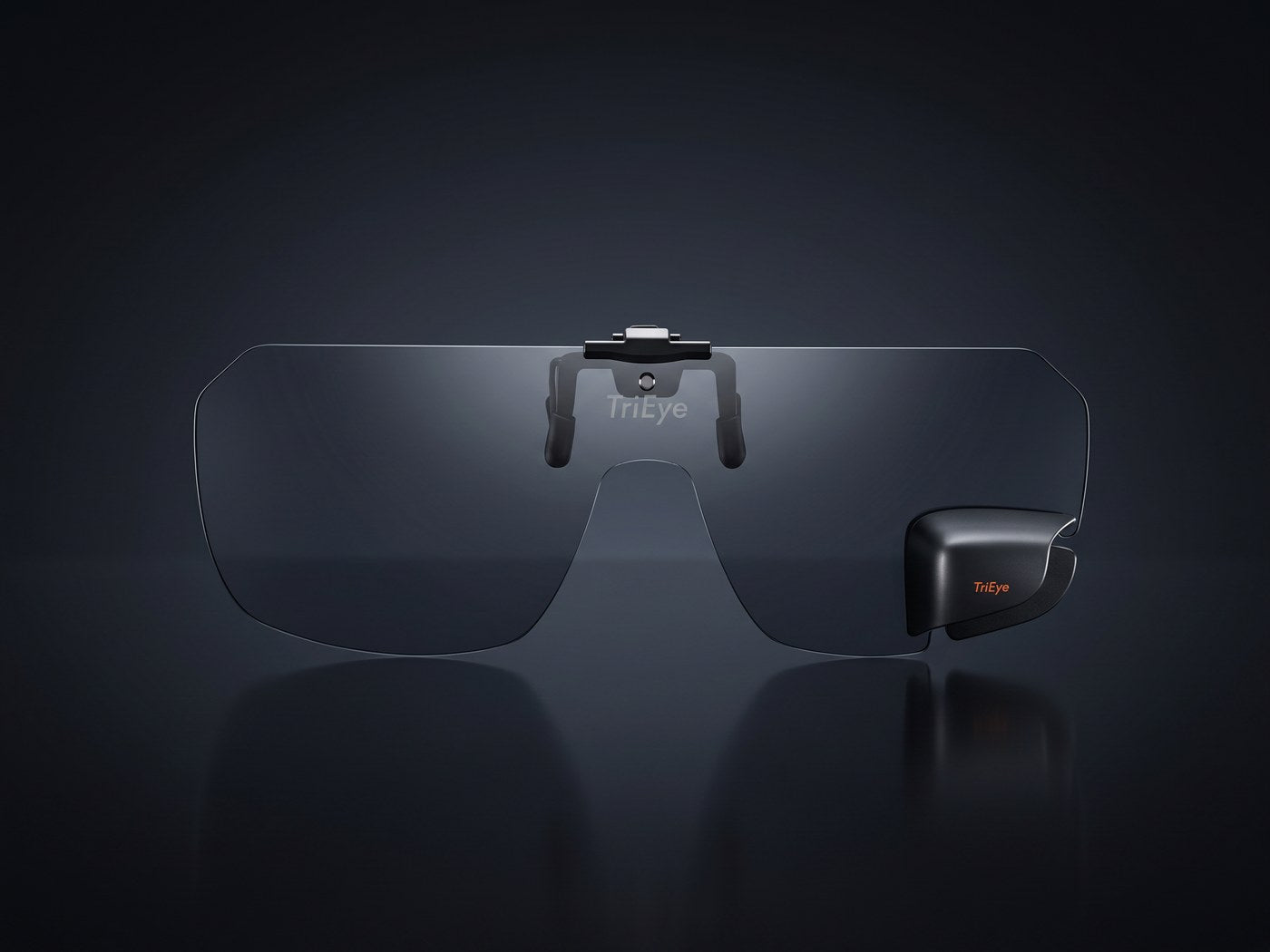
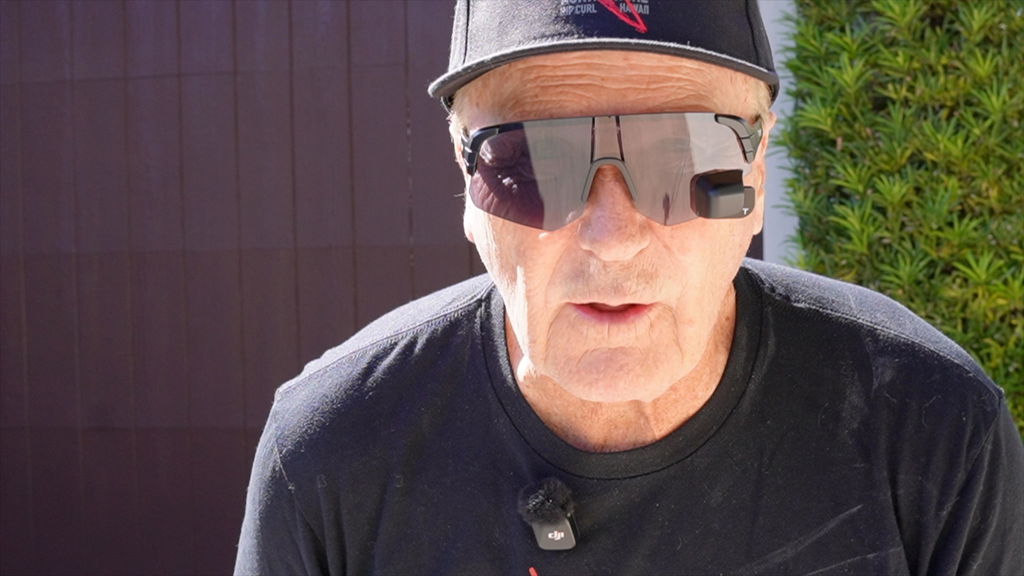
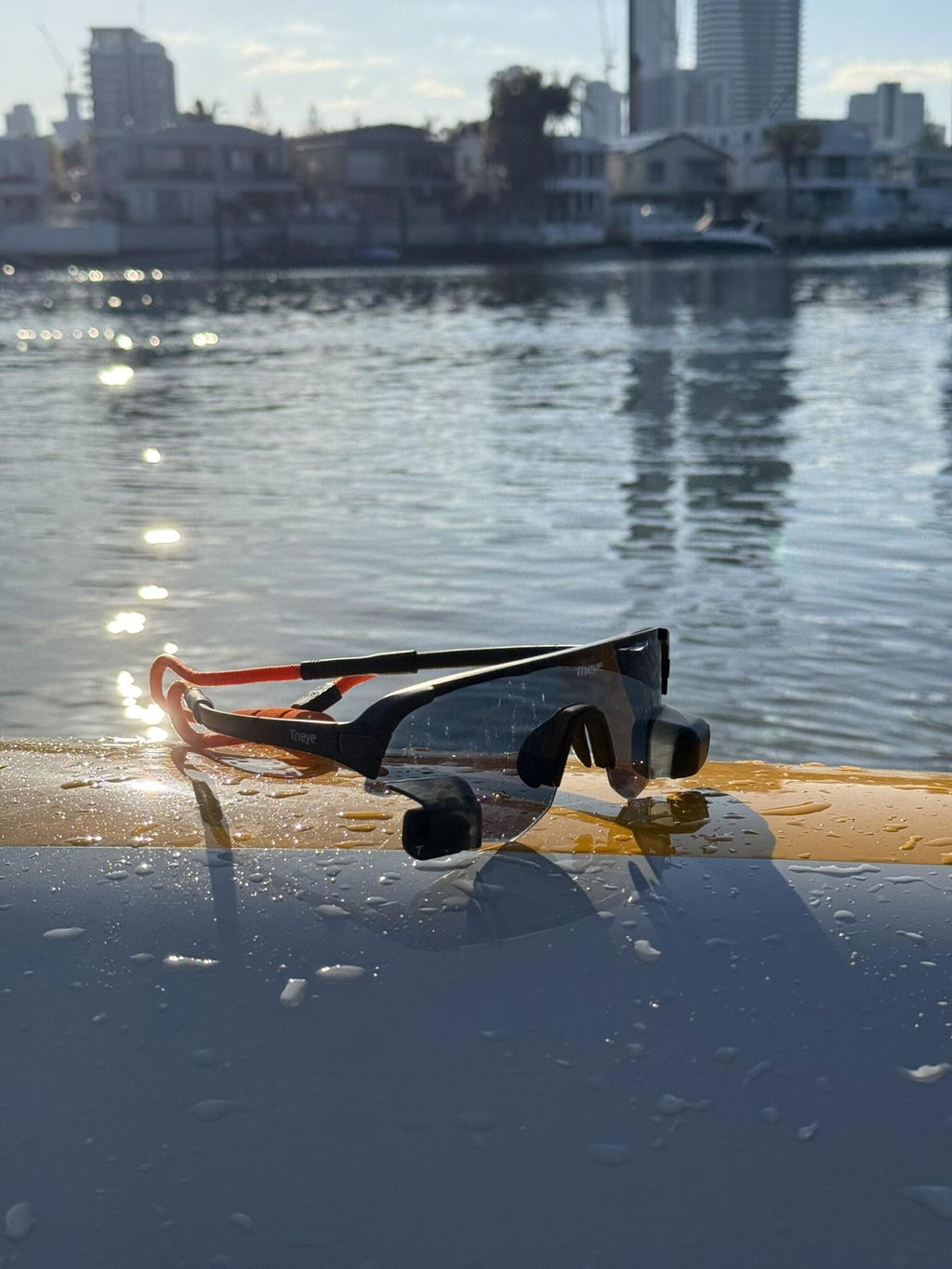
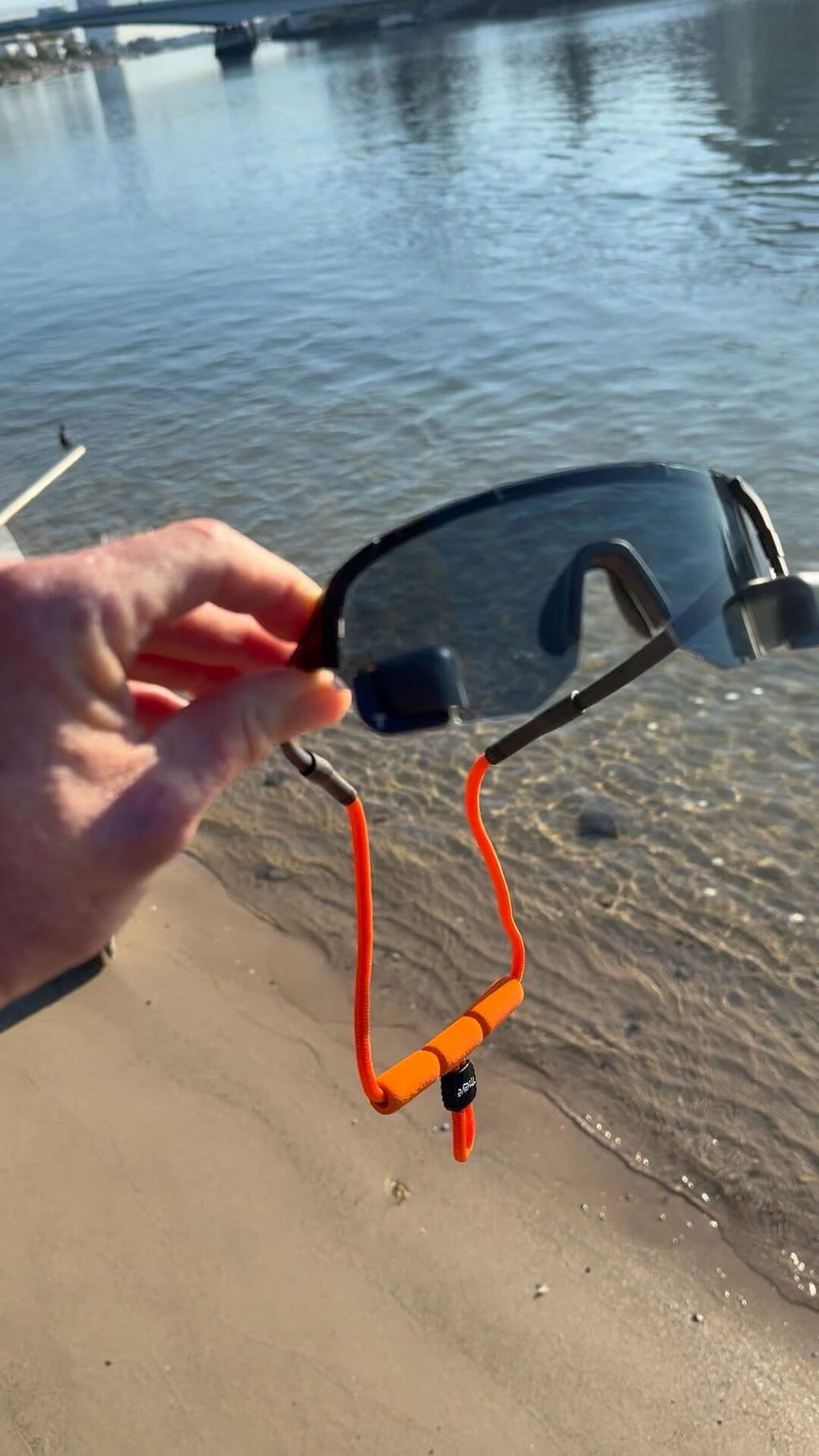
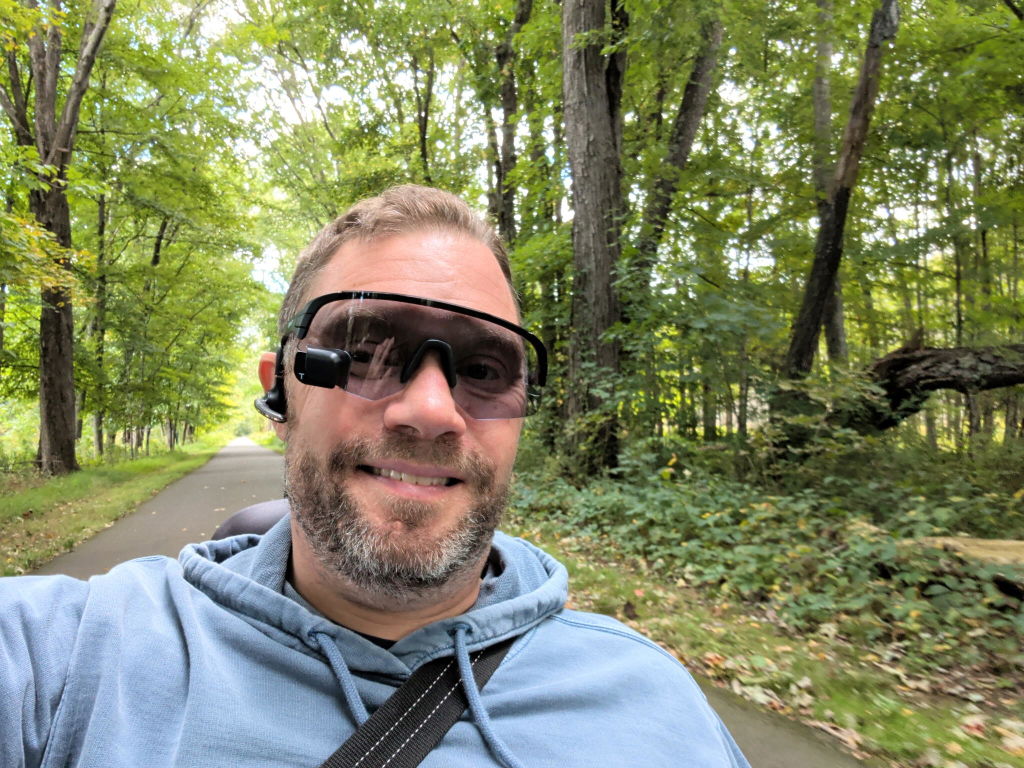
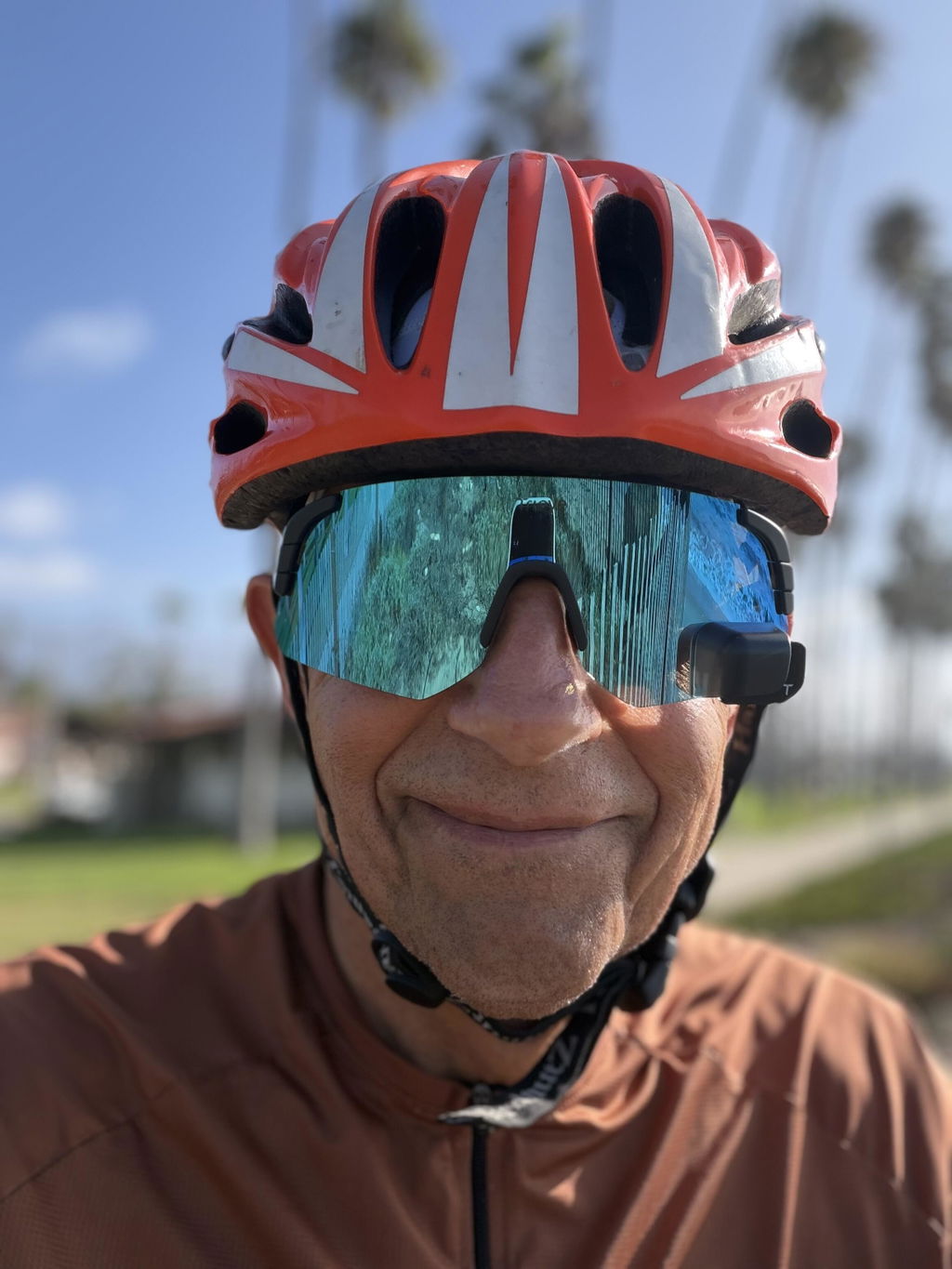
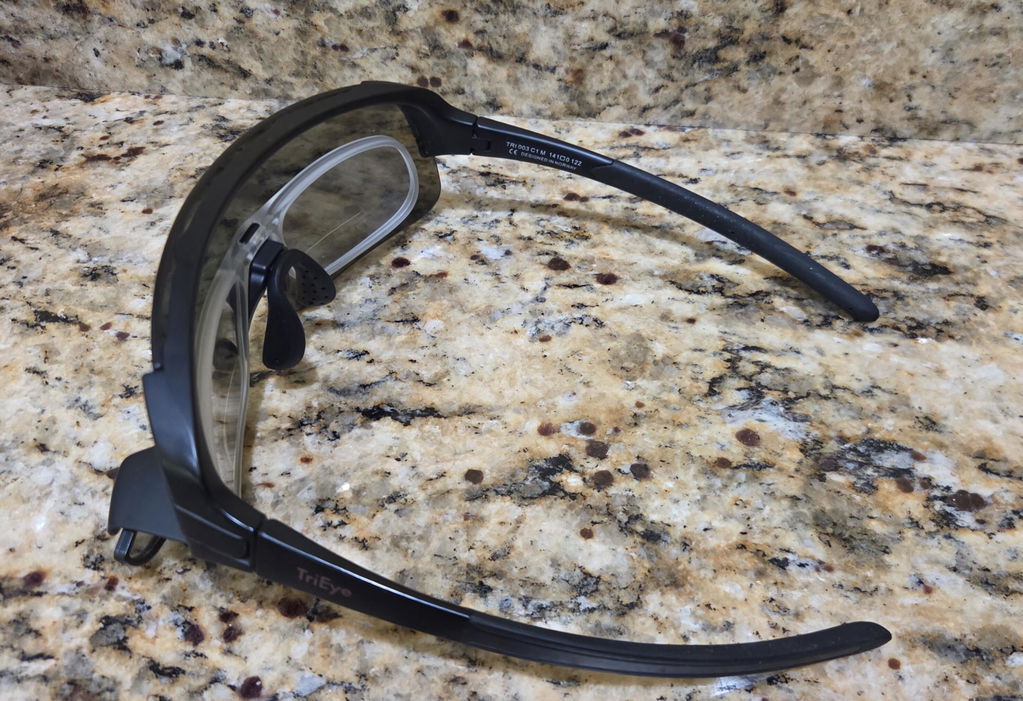
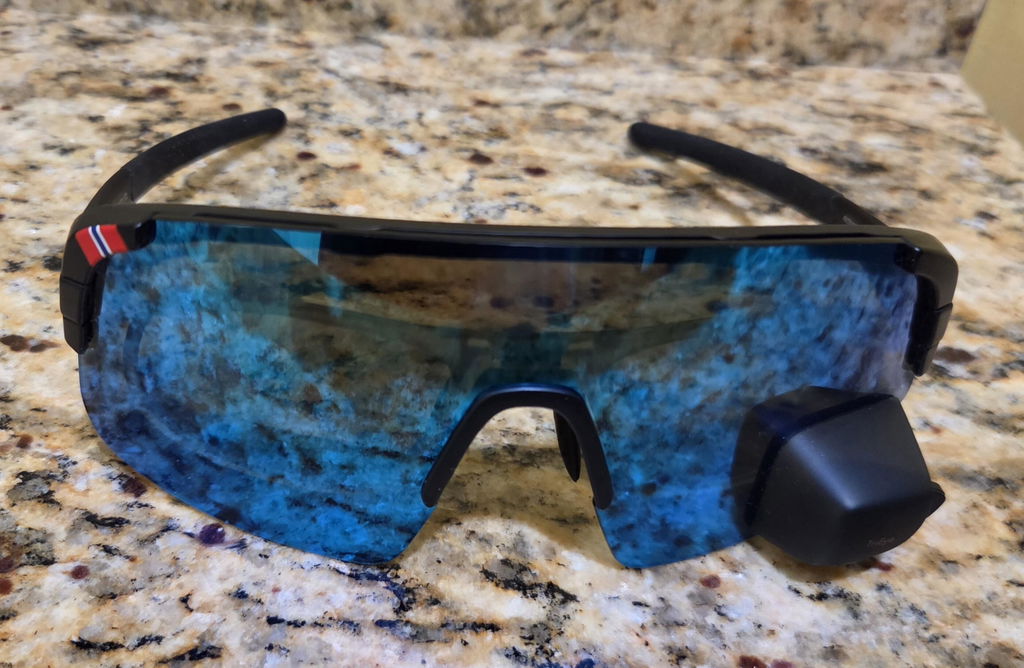
Cyclist's point-of-view through TriEye eyewear, looking ahead at a Norwegian fjord road with the integrated rear-view mirror showing a car approaching from behind
Mirror technology

Look ahead. See behind.

See 50 m back, no head turn.

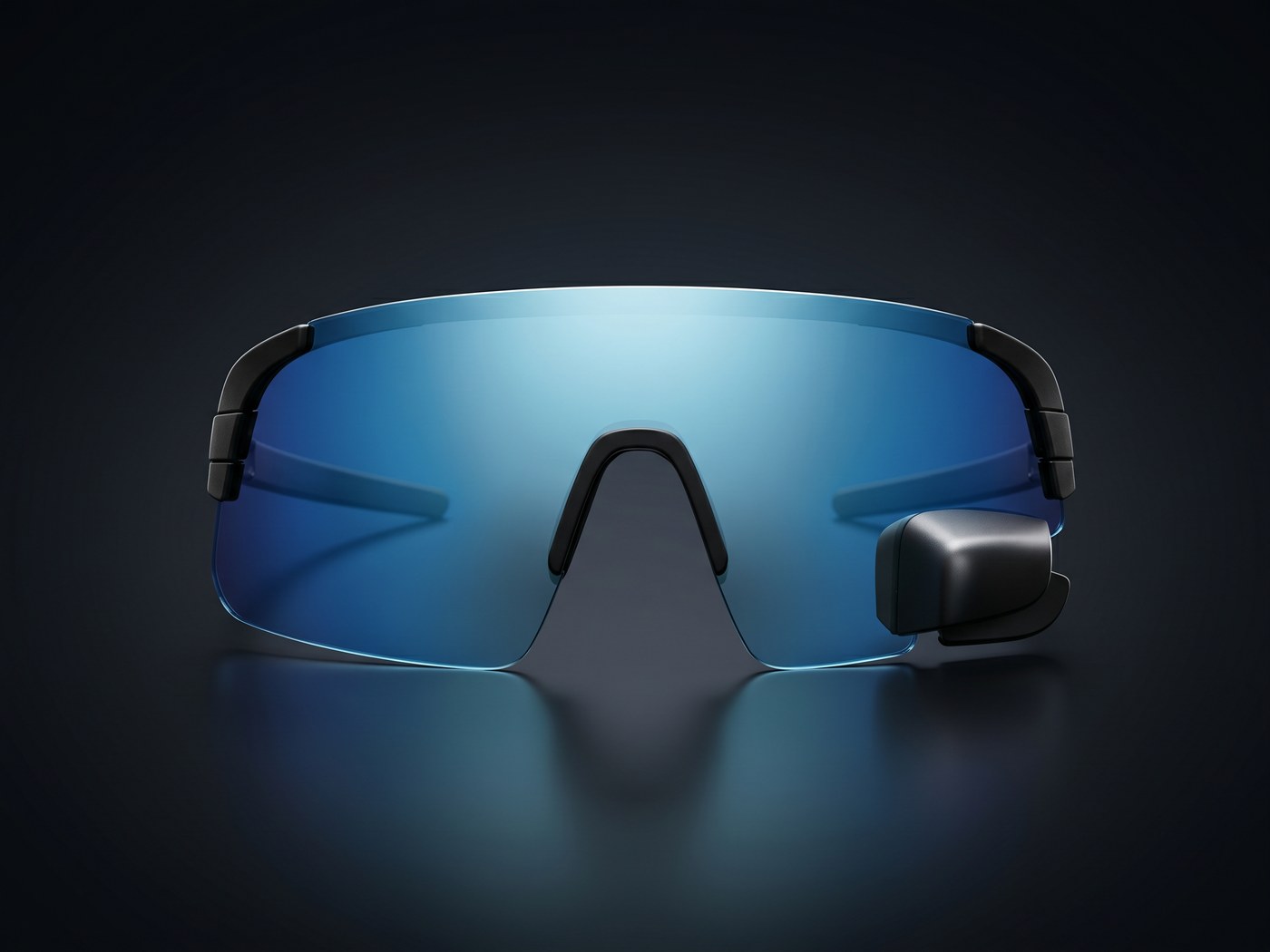
A precision rear-view mirror, built into the lens of your sunglasses.

How it works

Set it once. Trust it the rest of the ride.

Put on the glasses — cycling Put on the glasses — running Put on the glasses — rowing Put on the glasses — everyday
Step 1

Put on the glasses

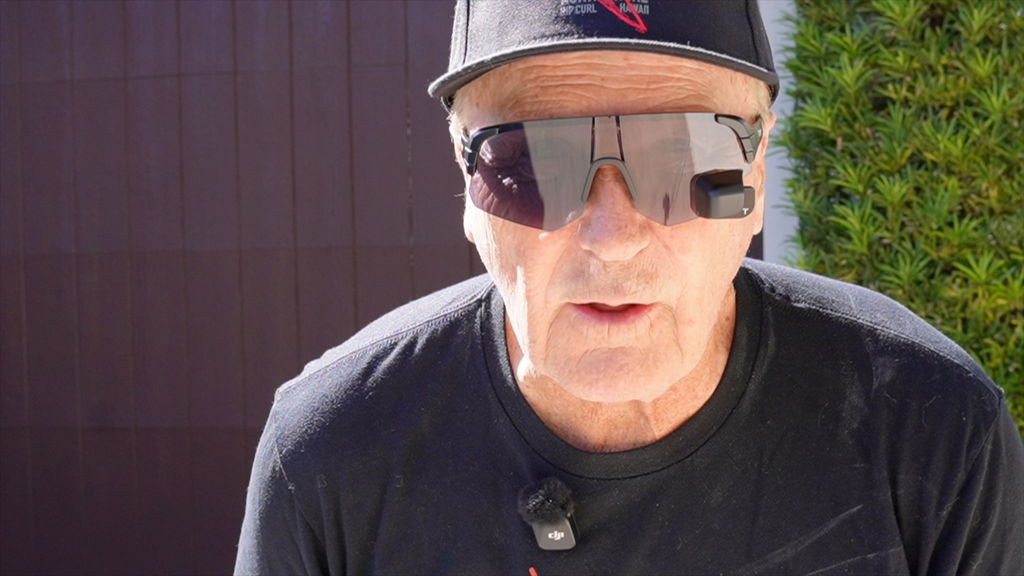
Make sure they sit level and comfortable on your nose and ears. The mirror works best when the frame is level.

Tilt the mirror — cycling Tilt the mirror — running Tilt the mirror — rowing Tilt the mirror — everyday
Step 2

Tilt the mirror

Adjust the ball-and-socket gimbal with your fingertip until you see your own cheek and shoulder. Pause if you can — easier to fine-tune at a standstill.

See behind you — cycling See behind you — running See behind you — rowing See behind you — everyday
Step 3

See behind you

A flick of the eye and a 15° tilt of the head — exactly how you check the wing mirror in your car. You see what's behind you without taking your eyes off where you're going.

What you actually see
  • Vehicles cars, motorbikes, e-scooters — anything approaching from behind
  • Your group fellow cyclists, rowers, or runners — riding, paddling, or moving with you
  • People on shared paths pedestrians, joggers, kids — on sidewalks, towpaths, and trails
  • Hazards in your blind spot buses, trucks, boats, jet-skis — whatever your sport puts behind you
Precision, where it matters

A mirror this small leaves no room for error.

Four engineering decisions that keep the rear view sharp.

Lower corner, like a car.
01 · Position

Lower corner, like a car.

Placed where the rear-view mirror sits in a car: low and to one side. Far enough from the centre of your vision that it never competes with the road ahead. Close enough that one short glance is all it takes.

Temperature stable.
02 · Thermal

Temperature stable.

Crafted to a tolerance that holds across the range you'll actually ride in. On a surface this small, a hair's worth of warping would blur the image instantly — so the housing is engineered so cold mornings, warm cafés, and sun-baked dark frames never move it.

Distance, by design.
03 · Optics

Distance, by design.

Your eye can't focus on something millimetres from your cornea. So the mirror sits at the far edge of a precision-machined housing built into the lens — far enough away that your eye reads it as easily as a rear-view mirror in a car. The housing geometry is what makes the image sharp.

Adjustable to your angle.
04 · Adjustability

Adjustable to your angle.

Riders sit differently — drops, hoods, upright. Heads turn differently. The mirror adjusts at the housing so you can dial in the angle once and trust it for the rest of the ride. The adjustability is what makes the same mirror work for every body.

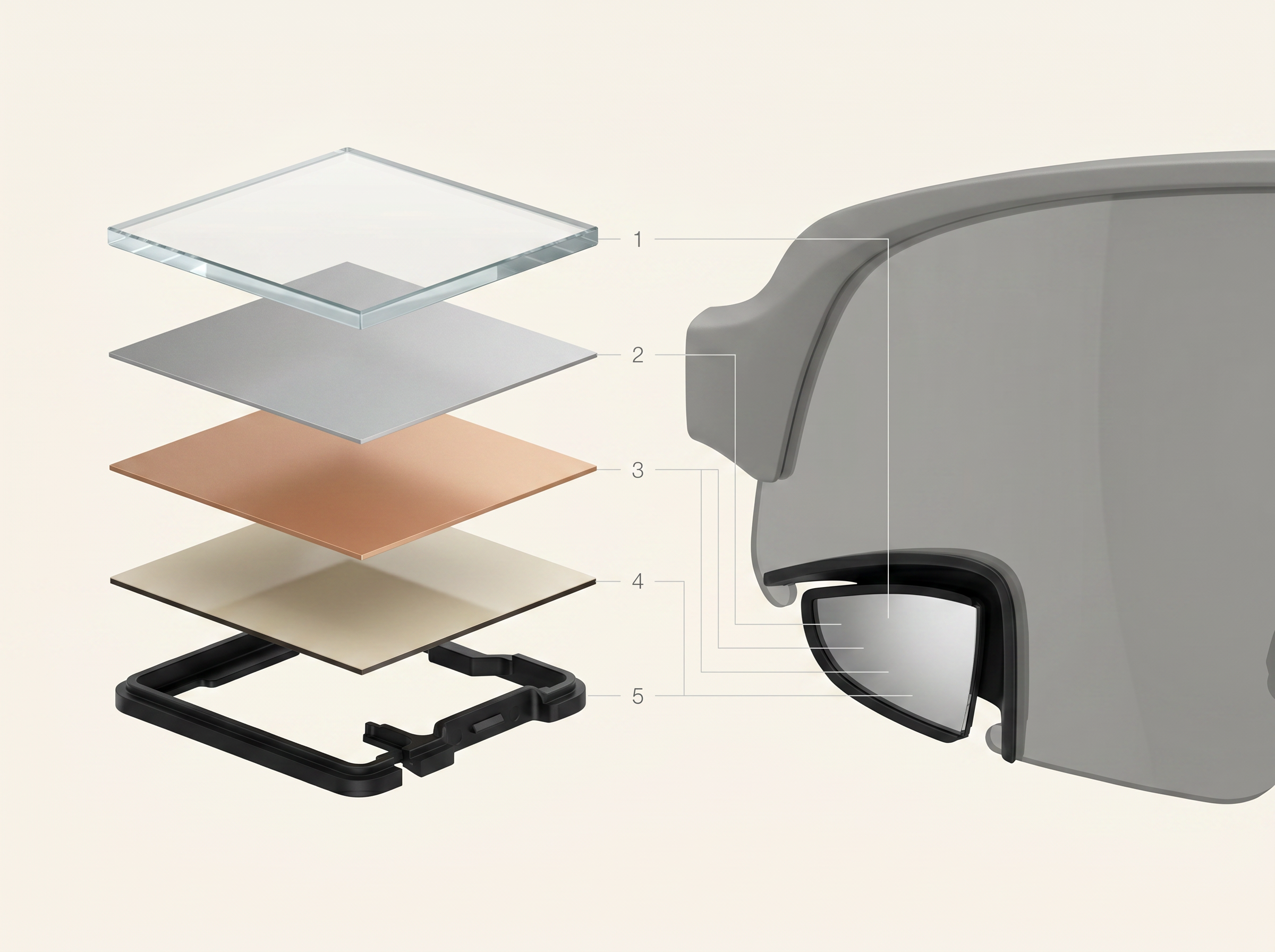
The TriEye mirror element: optical glass front, aluminium reflective coating, copper and lacquer backing, bonding adhesive, and precision-moulded carrier
Inside the mirror

Real glass. Crystal clear.

Most sport mirrors use silvered plastic. We did too — until hundreds of test rides showed it warps, distorts, and yellows. So we switched to real glass.

Bonded into a precision carrier and sealed for life, the TriEye mirror holds across every temperature swing. Crystal clear on day one and day a thousand.

Carsten Juell Fongen, founder
From the founder

I was riding with my family in the Norwegian mountains when my son crashed into me from behind. Lying in the dust, I knew a mirror would have caught him. But handlebar mirrors vibrate, helmet mirrors catch the wind, and a head-check takes your eyes off the road. So we built one into the lens.

— Carsten Juell Fongen, founder

Common questions

Handlebar mirrors vibrate at speed and lose the image. Helmet mirrors catch the wind and shift. The TriEye mirror is built into the lens — it moves with your eyes and stays steady whether you're climbing at 15 km/h or descending at 60.

No. The mirror sits in the lower outer corner of the lens — outside your central field of vision. You see it only when you glance toward it, the same way you check a car's rear-view. Day-to-day, you forget it's there.

Yes. The mirror sits on a ball-and-socket gimbal that tilts in any direction. Adjust it with a fingertip until you see your own cheek and shoulder — easier to set at a standstill, holds its position once dialled in.
Real optical glass with a vapor-deposited aluminium reflective coating — the same construction as a quality car's rear-view mirror. Not silvered plastic. Real glass holds its shape across temperature, doesn't yellow under UV, and stays crystal clear for the life of the eyewear.

Yes. The mirror is sealed and weatherproof. In low light, it reflects whatever light is behind you — including car headlights, which makes approaching vehicles especially easy to spot at dusk.

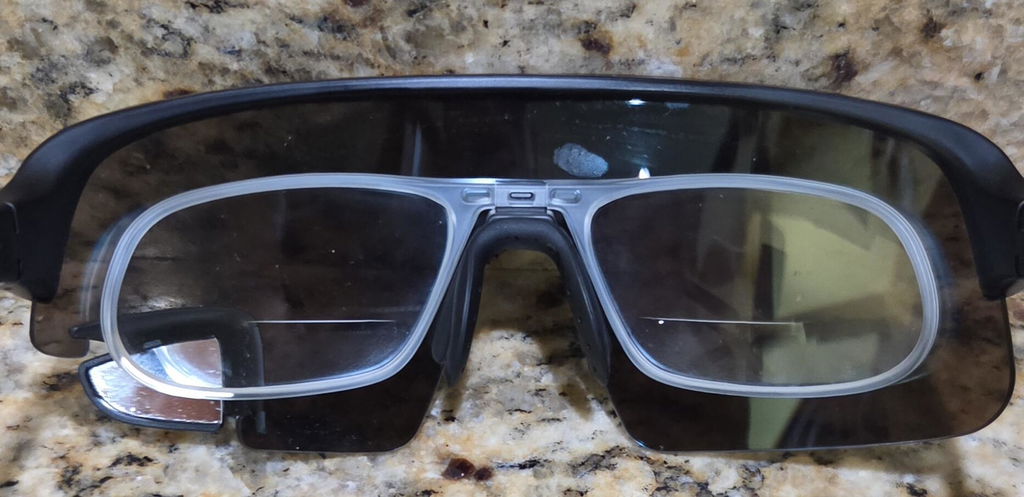
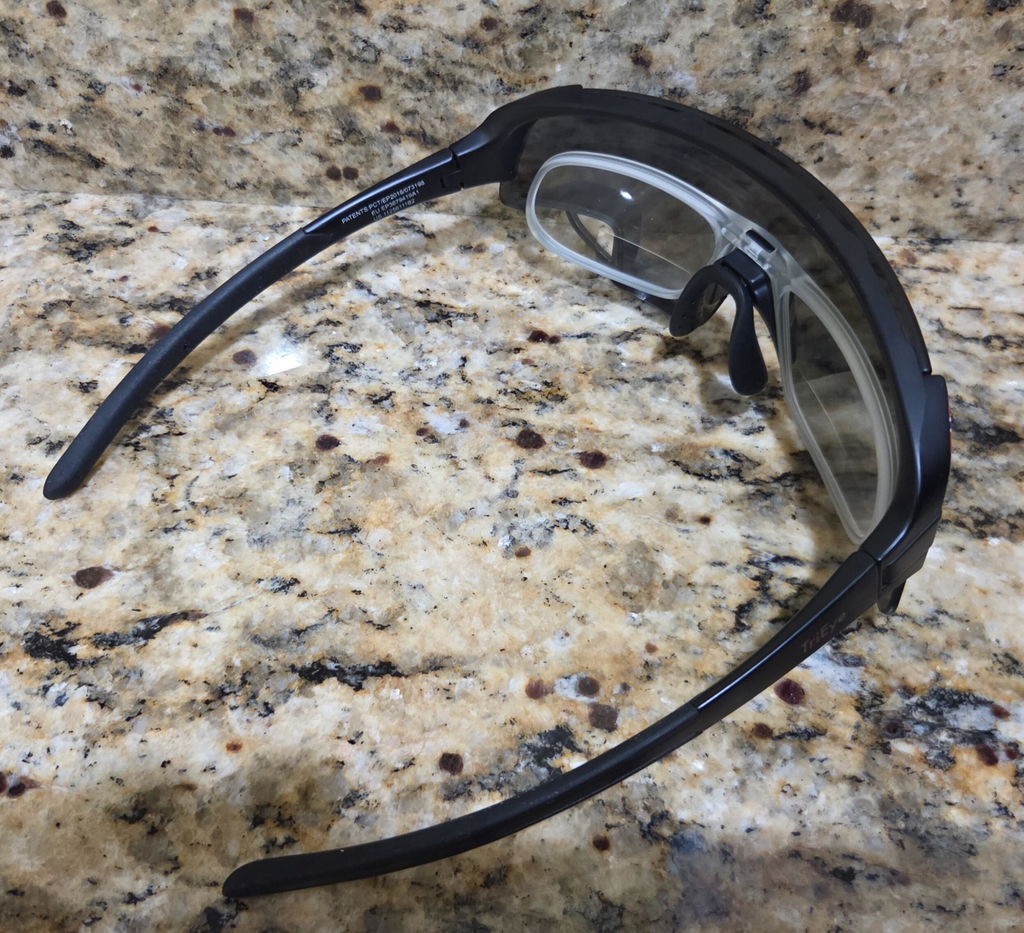
The View and The Classic accept prescription clip-ins from most opticians. The Clip-on adds the mirror to glasses you already own — including prescription frames.

Spare lens-and-mirror modules are available in our shop. Most riders never need one, but if you do, it's a simple swap.

Originally built for cycling, but now used widely by runners, rowers, and everyday commuters. Any activity where seeing what's behind you matters and a head-check costs you something.