

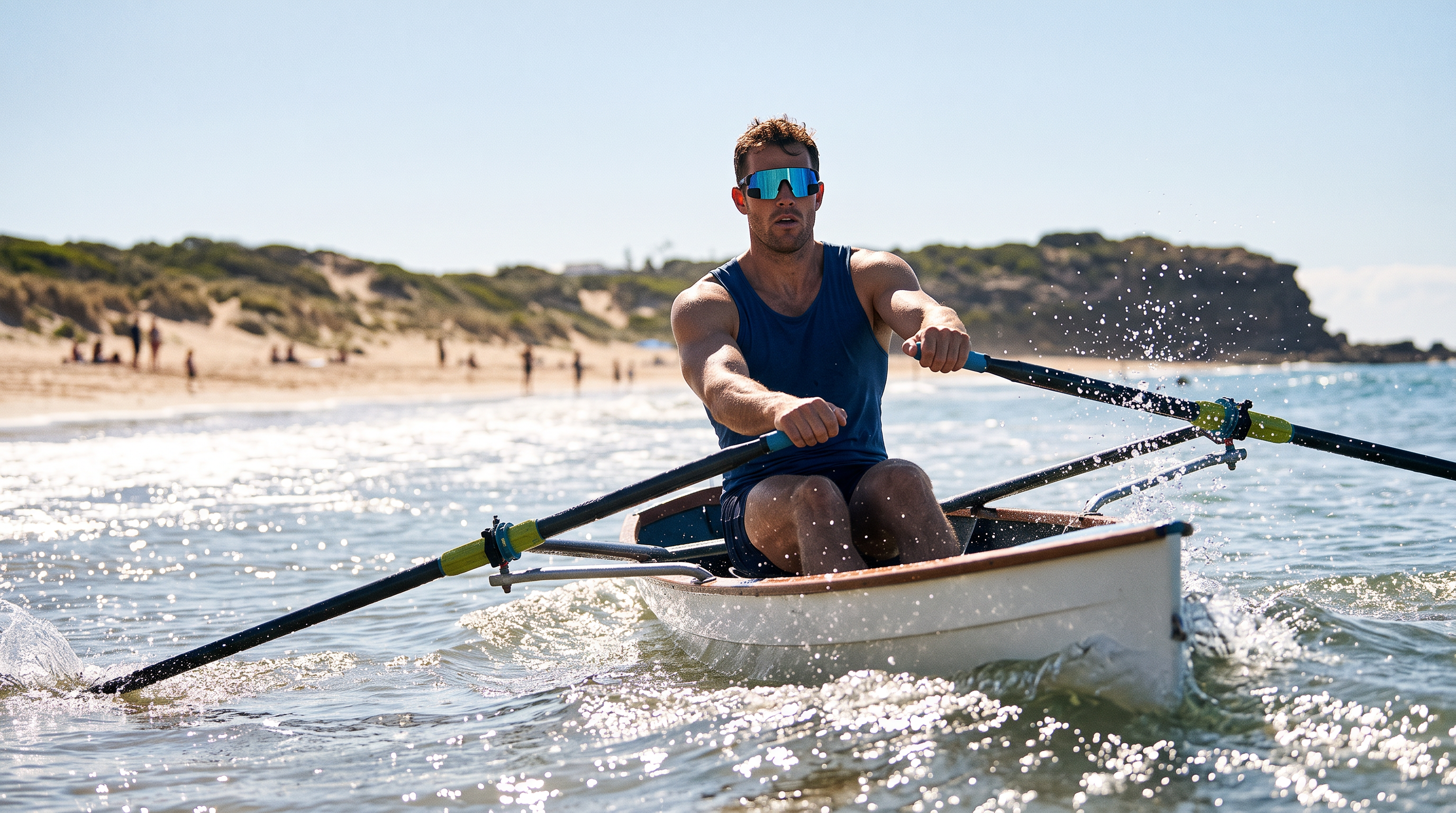
Los remeros costeros y de playa reman de espaldas mientras dirigen la embarcación hacia las olas, las salpicaduras y otras embarcaciones — la única dirección que no pueden ver es exactamente hacia donde van. Un espejo retrovisor integrado en el cristal de tus gafas de sol lo soluciona: una mirada te muestra el agua que tienes por delante sin interrumpir la palada. En aguas picadas, un espejo integrado en el cristal supera a uno montado en la embarcación porque se mueve con tus ojos, no con el casco.
El scull en aguas tranquilas ya es suficientemente exigente — vas hacia atrás por un carril que no puedes ver. Ahora añade una playa detrás de ti, un oleaje bajo el casco, salpicaduras en la cara y un cabo que intentas no golpear. Eso es el remo costero, y el problema de «¿qué tengo delante?» se vuelve mucho más urgente cuando el agua no se queda quieta.
Este es un deporte pequeño que está a punto de ganar una gran audiencia. Vale la pena resolver bien la cuestión de la visibilidad — antes de que lleguen las multitudes.
¿Por qué es más difícil ver hacia adelante en el remo costero?
Porque el agua se mueve. En aguas tranquilas puedes confiar en una línea recta durante unas pocas paladas; en olas y aguas picadas la embarcación guiña, el horizonte cabecea y los obstáculos se desplazan respecto a ti entre mirada y mirada.
Todos los remeros comparten el mismo problema de diseño: van sentados mirando hacia la popa y avanzan hacia la proa, así que su trayectoria está permanentemente detrás de su cabeza. En un río tranquilo lo gestionas con algún giro de hombros ocasional. El agua costera elimina ese margen. Una ola puede desviar tu proa en una sola palada, la salpicadura difumina la orilla lejana y rara vez estás solo ahí fuera — otros scullers, nadadores, tablas de paddle y alguna lancha motora comparten la misma franja de costa. La boya de giro que rodeaste limpiamente en la vuelta anterior está ahora en otro sitio. Mirar por encima del hombro para comprobarlo te cuesta una palada, algo de equilibrio y una cara llena de salpicaduras en el peor momento posible.
¿Por qué un espejo integrado en el cristal supera a uno montado en la embarcación?
Porque se mueve con tus ojos, no con el casco. Un espejo sujeto a una embarcación que cabecea y está empapada de salpicaduras vibra exactamente cuando más necesitas que esté quieto; un espejo integrado en el cristal permanece fijo a tu mirada.
Los espejos montados en la embarcación o en el rigger funcionan bien en aguas en calma. Ponlos en aguas costeras picadas y la física se vuelve en tu contra — el espejo vibra con cada golpe de ola, se empapa de salpicaduras y te muestra una imagen temblorosa y llena de gotas del mundo precisamente cuando el agua está más revuelta. Un espejo integrado en el cristal de tus gafas de sol está a pocos centímetros de tu ojo y se mueve cuando mueves la cabeza. Un simple movimiento de ojos y el camino por delante está ahí: sin estirarte, sin reajustar, sin perder una palada. TriEye lo llama ver lo que tienes por delante sin apartar los ojos de tu palada — en un deporte en el que se rema de espaldas, eso lo es todo. Para la mecánica de mantener una línea recta, nuestra guía sobre dirección en scull y cómo evitar colisiones complementa bien este artículo.
¿Qué es el beach sprint rowing — y por qué está a punto de hacerse grande?
El beach sprint rowing es una carrera de correr-remar-correr disputada entre las olas, y debuta en los Juegos Olímpicos de Los Ángeles 2028 — el primer formato nuevo del remo en los Juegos en toda una generación.
Así se desarrolla una carrera: los atletas esprintan por la arena, saltan a una embarcación costera de casco abierto, reman aproximadamente 250 m hacia afuera entre las olas hasta una boya de giro, luego regresan remando y esprintan hasta la línea de meta en la playa. La inclusión de los Beach Sprints en LA28 fue confirmada por el COI, con tres pruebas con medalla — individual masculino, individual femenino y doble scull mixto, el primer evento mixto en la historia del remo olímpico. Según Olympics.com, las carreras tendrán lugar en el paseo marítimo de Long Beach. El presidente de World Rowing, Jean-Christophe Rolland, calificó el movimiento de «transformador para nuestro deporte en términos de exposición global». Traducción: mucha más gente está a punto de probar el remo donde hay olas — y descubrir cuánto no pueden ver.
¿Cómo afecta el deslumbramiento sobre el agua a los remeros costeros?
El mar duplica tu problema de luz: sol desde arriba y una segunda dosis rebotando desde la superficie directamente a tus ojos, borrando la orilla, las boyas y las otras embarcaciones que intentas seguir.
El agua abierta es uno de los entornos de deslumbramiento más duros que existen — con el sol bajo, la superficie refleja una enorme cantidad de luz hacia ti, y el deslumbramiento reflejado aplana el contraste que necesitas para leer las aguas picadas y detectar obstáculos cerca de la costa. Es tanto un problema de rendimiento como de comodidad: entornos con los ojos entrecerrados ante un mar brillante y plano como un espejo, te perderás al palista cruzando tu línea mucho antes de que lo perdieras en un río sombreado. Dos trucos con el cristal ayudan. Un cristal polarizado corta el deslumbramiento horizontal que viene del agua. Y cambiar al tinte adecuado para las condiciones mantiene el contraste alto — nuestra guía para elegir cristales de gafas de sol desglosa las categorías fotocromáticas, polarizadas y de tinte. Dado que los cristales de TriEye son intercambiables, puedes usar un cristal polarizado para remar a pleno sol del mediodía y cambiarlo por uno más claro cuando está nublado.
¿Cómo se usa un espejo retrovisor sin romper el ritmo?
Trátalo como el espejo de un coche: una mirada rápida y habitual durante la recuperación, no una mirada fija. Compruebas, registras y sigues remando — la palada nunca se detiene por ello.
La fase de recuperación, cuando tus manos avanzan y la embarcación desliza, es tu momento libre para mirar. Desplaza los ojos hacia el espejo, lee el agua y cualquier embarcación por delante, luego vuelve a tu palada — todo ello lleva una fracción de segundo y tu cabeza apenas se mueve. Los usuarios nuevos del espejo tienden a mirar demasiado al principio; en una o dos sesiones se integra en el ritmo y dejas de notar que lo haces. En un recorrido costero, incorpora la mirada en tu aproximación a la boya de giro y a la playa, donde el tráfico y las olas son más densos. No sustituirá una mirada completa en los momentos críticos, pero elimina las docenas de pequeños giros de hombros que antes te costaban velocidad y equilibrio.
¿Qué configuración de TriEye es la adecuada para el remo costero?
Opta por el doble. Para el remo, recomendamos The View con el espejo doble — un espejo a ambos lados del cristal shield único — para que puedas comprobar tu línea independientemente de hacia qué lado gire la embarcación.
The View es un cristal shield envolvente único con el espejo retrovisor integrado en él. La configuración simple coloca el espejo más pequeño en un lado (el izquierdo del usuario por defecto); la configuración doble añade el espejo más grande en ambos lados. En aguas tranquilas, el simple es más que suficiente. En carreras costeras, donde maniobras alrededor de boyas, lees las olas por ambas bandas y compartes aguas costeras concurridas, el doble te da una referencia a cada lado con solo una ligera inclinación de cabeza. Nada queda fijado en el momento de la compra — los cristales se intercambian fácilmente, así que puedes añadir un espejo más grande o cambiar el tinte más adelante. Si estás valorando las opciones, nuestra guía de espejo simple vs. doble explica qué configuración se adapta a cada perfil, y por qué los scullers usan gafas de sol con espejo retrovisor cubre el caso de aguas tranquilas.
| Forma de ver hacia adelante | En aguas tranquilas | En olas y aguas picadas |
|---|---|---|
| Giro de hombros | Funciona, pero cuesta una palada | Arriesgado — pierdes equilibrio y recibes salpicaduras en la cara |
| Espejo montado en la embarcación o el rigger | Vista estable y clara | Vibra y se empapa; difícil de leer |
| Espejo integrado en el cristal (doble) | Una mirada, ojos al frente | Se mueve con tus ojos — la opción más estable en aguas picadas |
Un espejo no rema por ti, ni calma el mar. Lo que hace es eliminar la única dirección ciega con la que carga un deporte en el que se rema de espaldas — para que pases menos tiempo girándote y más tiempo mirando el agua hacia la que realmente te diriges.
Remo costero y de playa: preguntas frecuentes
¿Realmente necesitan los remeros un espejo si pueden mirar por encima del hombro?
Siempre puedes mirar — pero cada giro de hombros cuesta una palada y algo de equilibrio, y en las olas cuesta más. Un espejo convierte las comprobaciones rutinarias en una simple mirada, de modo que solo haces el giro completo cuando realmente importa.
¿Espejo simple o doble para el remo costero?
Doble. En las carreras costeras maniobras alrededor de boyas y lees el agua por ambas bandas, así que un espejo a cada lado del cristal te da una referencia en cualquier dirección con solo una ligera inclinación de cabeza. El simple está bien para aguas tranquilas en calma.
¿Debería usar un cristal polarizado en el agua?
Normalmente sí — los cristales polarizados cortan el deslumbramiento horizontal que rebota desde la superficie, lo que te ayuda a leer las aguas picadas y detectar otras embarcaciones. Los cristales de TriEye se intercambian fácilmente, así que puedes usar el polarizado en días luminosos y un tinte más claro cuando está nublado.
¿Las salpicaduras y el agua salada estropearán el espejo?
El espejo está integrado en el cristal, así que lo limpias como cualquier cristal de gafas de sol — aclara la sal con agua dulce y sécalo con cuidado. Al estar cerca de tu ojo en lugar de en la embarcación, recibe mucho menos impacto que un espejo montado en el casco.
¿El beach sprint rowing es ya un deporte olímpico?
Sí — el beach sprint rowing (un formato costero) debuta en los Juegos Olímpicos de Los Ángeles 2028 con tres pruebas con medalla, celebradas en el paseo marítimo de Long Beach. Es el primer formato olímpico nuevo del remo en décadas.

