

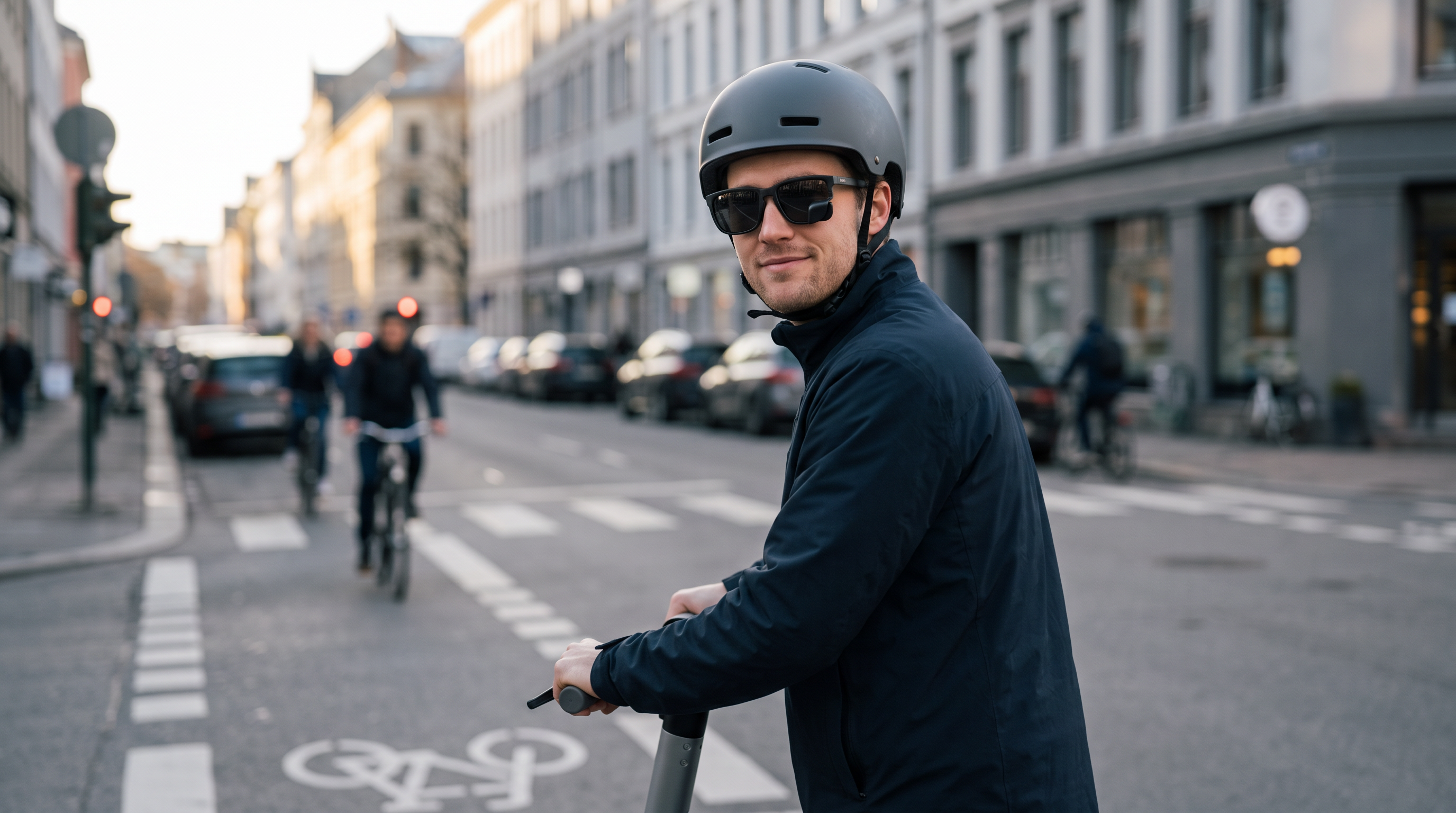
Auf dem E-Scooter sind gesehen werden und nach hinten sehen zwei verschiedene Aufgaben. Um gesehen zu werden, verlangen die meisten Regionen ein weißes Frontlicht, ein rotes Rücklicht oder einen roten Reflektor, seitliche oder Radreflektoren und oft einen Helm – prüf immer deine örtlichen Regeln, denn sie unterscheiden sich. Um zu sehen, was von hinten kommt, kannst du bei Tempo keinen sicheren Schulterblick machen – nutz also einen Spiegel. Ein in deine Sonnenbrille eingebauter Rückspiegel hält deinen Blick nach vorne gerichtet, während du den Verkehr im Auge behältst.
Auf dem Scooter stehst du schmal, leise und niedriger, als ein Autofahrer erwartet. Du fädelst dich in Verkehr ein, der schneller ist als du, und hast trotzdem kaum eine einfache Möglichkeit zu sehen, was hinter dir ist – keine Schulter, über die du locker einen Blick werfen könntest, keine entspannte Kopfdrehung wie beim Gehen. Pendeln mit dem Scooter ist wirklich gut: günstig, schnell, und du sparst dir die Parkplatzsuche. Aber das Sichtbarkeitsproblem ist real, und es teilt sich sauber in zwei Teile. Da ist deine Sichtbarkeit für den Verkehr – vor allem Licht, Reflektoren und ein bisschen Recht. Und da ist dein eigener Überblick über den Verkehr hinter dir, den kein Reflektor löst. Dieser Leitfaden behandelt beides, ehrlich und ohne so zu tun, als würde dich irgendein Gadget unverwundbar machen.
Warum ist die Sicht nach hinten auf dem E-Scooter so wichtig?
Die Sicht nach hinten ist wichtig, weil die Gefahren, die am schnellsten näher kommen – Autos, Busse, andere Fahrer –, von hinten kommen, wo du sie nicht siehst, ohne dich umzudrehen.
Die Nutzung von Scootern ist schnell gestiegen, und die Verletzungszahlen mit ihr. Die Besuche in US-Notaufnahmen im Zusammenhang mit Mikromobilitätsprodukten stiegen laut der U.S. Consumer Product Safety Commission von schätzungsweise 37.300 im Jahr 2017 auf 149.100 im Jahr 2024. Das liegt zum Teil einfach daran, dass mehr Menschen fahren. Aber es erinnert daran, dass du auf einem Scooter ohne jede Knautschzone eines Autos im Verkehr unterwegs bist.
Jetzt der ehrliche Teil. Die meisten Scooter-Verletzungen sind Stürze – das Vorderrad rutscht in einem Schlagloch weg, auf einem nassen Gullydeckel oder an einer Bordsteinkante, die man im falschen Winkel nimmt. Eine Übersichtsarbeit von 2024 zur Forschung über E-Scooter-Verletzungen ergab, dass Stürze mit Abstand die häufigste Ursache sind, während Kollisionen mit Kraftfahrzeugen nur einen kleinen Teil ausmachen – aber genau die sind es, die schwer oder tödlich enden. Ein Spiegel ändert nichts an deinem Sturzrisiko. Was er verändert, ist die Verkehrsseite: das Auto, das von hinten näher kommt und das du sonst nie sehen würdest, und das unterschwellige Unbehagen, nicht zu wissen, was hinter dir auf einer belebten Spur los ist.
Welche Sichtbarkeitsregeln für E-Scooter solltest du prüfen?
Die Regeln unterscheiden sich stark je nach Land, Bundesland und sogar Stadt – aber die meisten Rechtsordnungen laufen auf dieselbe kurze Liste hinaus: ein Frontlicht, ein Rücklicht oder Reflektor und oft eine Helmpflicht und eine Geschwindigkeitsbegrenzung.
Weil das Recht bei E-Scootern noch hinterherhinkt, gibt es keinen einheitlichen globalen Standard, und „hier erlaubt“ kann „zwei Orte weiter verboten“ heißen. Sieh die Tabelle unten als gemeinsame Grundlage und prüf dann die Details dort, wo du tatsächlich fährst – maßgeblich ist die Website deiner örtlichen Verkehrsbehörde. Leih-Scooter haben Licht und Geschwindigkeitsbegrenzung meist schon eingebaut; bei privaten Scootern liegt diese Verantwortung bei dir.
| Anforderung | Was üblicherweise verlangt wird | Warum es sie gibt |
|---|---|---|
| Frontlicht | Weißes Dauerlicht, nach Einbruch der Dunkelheit sichtbar | Lässt Gegenverkehr und Fußgänger sehen, dass du kommst |
| Rücklicht / Reflektor | Rotes Rücklicht oder roter Reflektor | Macht dich für den Verkehr sichtbar, der von hinten näher kommt |
| Seiten- / Radreflektoren | Gelbe oder am Rad montierte Reflektoren | Hilft Autofahrern, dich an Kreuzungen und Übergängen einzuschätzen |
| Helm | Für manche Fahrer Pflicht, für alle dringend empfohlen | Kopfverletzungen gehören zu den schwersten Folgen von Scooter-Unfällen |
| Geschwindigkeitsbegrenzung | Oft begrenzt (häufig etwa 15–20 mph / 25 km/h) | Weniger Tempo heißt kürzerer Bremsweg und weniger schwere Unfälle |
| Wo du fahren darfst | Radwege / Straßen ja, Gehwege oft nicht | Trennt Scooter von Fußgängern und schnellem Autoverkehr |
Warum ist der Schulterblick bei Scooter-Tempo riskant?
Der Schulterblick ist riskant, weil ein Scooter mit seinem kurzen Radstand und dem Fahren im Stehen nervös reagiert – in dem Moment, in dem du dich zum Zurückschauen drehst, gehen deine Linie und deine Stabilität mit.
Auf dem Fahrrad sitzt du, dein Schwerpunkt ist tief, und du kannst von einer ziemlich stabilen Basis aus zurückschauen. Auf dem Scooter stehst du aufrecht über einer kleinen Plattform mit direkter Lenkung. Dreh Kopf und Schultern, und du spürst, wie das Vorderrad dorthin wandert, wohin du schaust – genau dann, wenn es am dringendsten geradeaus fahren soll. Kommen ein kaputter Belag oder eine Straßenbahnschiene dazu, ist genau diese halbe Sekunde, in der du wegschaust, der Moment, in dem das Vorderrad hängen bleibt. Du tauschst den Überblick, den du wolltest, gegen die Balance, auf die du nicht verzichten kannst.
Radfahrende kennen dieses Problem gut, und deshalb kommen wir immer wieder auf eine einfache Idee zurück: Ersetze die Drehung durch einen kurzen Blick. Wenn dich das Thema über Scooter hinaus interessiert, geht unser Artikel zum Situationsbewusstsein auf dem Rad tiefer auf die Technik ein.
Wie siehst du den Verkehr hinter dir, ohne dich umzudrehen?
Nutz einen Spiegel. Mit einem Rückspiegel behältst du mit einer kurzen Augenbewegung im Blick, was hinter dir ist – statt einer kompletten Kopf- und Schulterdrehung, die den Scooter aus dem Gleichgewicht bringt.
Es gibt ein paar Möglichkeiten, einen Spiegel zu ergänzen. Lenker- oder Lenkrohrspiegel werden an den Scooter geschraubt, vibrieren aber auf rauem Asphalt, und viele Klapp-Scooter haben keinen guten Montagepunkt. Helmspiegel werden an den Helm geklemmt, brauchen aber Geduld beim Ausrichten und wippen mit deinem Kopf. Die Lösung, die wir herstellen – und die den Spiegel in deiner natürlichen Blickrichtung hält –, ist ein Spiegel, der in deine Sonnenbrille integriert ist. Du schaust leicht nach unten links, und die Straße hinter dir ist einfach da – keine Hardware am Scooter, nichts, was du bei jeder Fahrt neu ausrichten musst.
Diese Idee ist nicht in einem Konferenzraum entstanden. TriEye gibt es wegen eines Beinahe-Unfalls: Gründer Carsten Juell Fongen fuhr in den norwegischen Bergen bergab, als sein eigener Sohn, der hinter ihm fuhr, ihm auffuhr – ein Aufprall aus der einen Richtung, die er nicht im Blick haben konnte. Die Lösung wurde ein Spiegel, den man trägt. Auf dem Scooter gilt dieselbe Logik: Die Gefahr, die du nicht siehst, ist die, gegen die es sich lohnt, etwas zu entwickeln.
Welche Ausrüstung für Sichtbarkeit sollte jeder E-Scooter-Pendler dabeihaben?
Mindestens: Licht vorne und hinten, Reflektoren, einen Helm und etwas, mit dem du nach hinten sehen kannst. Kombinier alles – kein einzelnes Teil erledigt die ganze Aufgabe.
Denk bei Sichtbarkeit an zwei Richtungen gleichzeitig. Licht und Reflektoren machen dich für alle anderen sichtbar; ein Spiegel und eine gute Position machen den Verkehr für dich sichtbar. Wer sich im Stadtverkehr am entspanntesten fühlt, nutzt meist ganz selbstverständlich beide Ebenen.
- Licht vorne + hinten – Dauerlicht ist besser als reines Blinklicht, damit andere deine Entfernung einschätzen können; auch tagsüber an grauen Morgen einschalten.
- Reflektoren – günstig, passiv und sie funktionieren, wenn dein Akku es nicht tut. Seiten- und Radreflektoren helfen an Kreuzungen.
- Helm – bei Scooter-Tempo nicht verhandelbar, egal was das örtliche Gesetz sagt.
- Ein Spiegel – das Teil, das die meisten weglassen, und das, das aus einem blinden Schulterblick einen kurzen Blick macht.
- Warnkleidung oder helle Farben – eine helle Jacke oder reflektierende Streifen geben dir bei wenig Licht zusätzlichen Spielraum.
Wie entwickelst du sicherere Gewohnheiten beim Pendeln?
Entwickle die Gewohnheit so, wie du gelernt hast, im Auto in den Spiegel zu schauen: ein regelmäßiger Blick, im Verkehr etwa alle paar Sekunden und immer, bevor du seitlich ausweichst.
Ein Spiegel hilft nur, wenn du ihn auch benutzt – und anfangs wirst du das nicht tun, weil du vergisst, dass er da ist. Gib ihm eine Woche Pendelfahrten. Üb auf einem ruhigen Abschnitt, bis der Blick in den Spiegel vor jedem Positionswechsel automatisch geht, und lass ihn dann in den Hintergrund rücken. Kombinier das mit den Grundlagen, die nie aus der Mode kommen: Halte eine berechenbare Linie, fahr dort, wo Autofahrer dich erwarten, zeig deine Manöver früh an und geh davon aus, dass man dich nicht gesehen hat, bis du Blickkontakt hast. Mehr zum entspannten Fahren im dichten Verkehr findest du in unserem Leitfaden Aufmerksam pendeln in der Stadt, Teil unserer Artikelreihe zum Blick nach hinten.
Häufige Fragen
Ist Licht am E-Scooter gesetzlich vorgeschrieben?
In den meisten Regionen ja – typischerweise ein weißes Frontlicht und ein rotes Rücklicht oder ein roter Reflektor, wenn du nach Einbruch der Dunkelheit fährst. Die genaue Regel hängt davon ab, wo du fährst, also prüf die Vorgaben deiner örtlichen Verkehrsbehörde, bevor du pendelst.
Brauche ich einen Spiegel, wenn ich schon gutes Licht habe?
Beides erfüllt unterschiedliche Aufgaben. Licht und Reflektoren machen dich für den Verkehr sichtbar; ein Spiegel lässt dich den Verkehr sehen, der von hinten näher kommt. Auf dem Scooter kannst du bei Tempo keinen sicheren Schulterblick machen, also deckt ein Spiegel die blinde Richtung ab, die Licht nicht abdecken kann.
Kann ich eine Sonnenbrille mit Rückspiegel auf dem Scooter nutzen?
Ja. Ein ins Glas integrierter Spiegel hält die Straße hinter dir in deiner natürlichen Blickrichtung – ohne Hardware, die an den Scooter geschraubt und bei jeder Fahrt neu ausgerichtet werden muss. The Classic ist unsere Alltagsbrille, die genau für diese Art des Pendelns in der Stadt gemacht ist.
Ist ein Helm auf dem E-Scooter Pflicht?
Für manche Fahrer und an manchen Orten ja, und überall dringend empfohlen. Kopfverletzungen gehören zu den schwersten Folgen von Scooter-Unfällen, deshalb lohnt sich ein Helm auch dort, wo das örtliche Gesetz keinen vorschreibt.
Wie schnell dürfen E-Scooter fahren?
Viele Rechtsordnungen begrenzen E-Scooter auf etwa 15–20 mph (rund 25 km/h), und Leih-Scooter setzen das oft elektronisch um. Weniger Tempo heißt kürzere Bremswege – selbst wo das Limit höher liegt, ist es im dichten Verkehr also sicherer, vom Gas zu gehen.

