

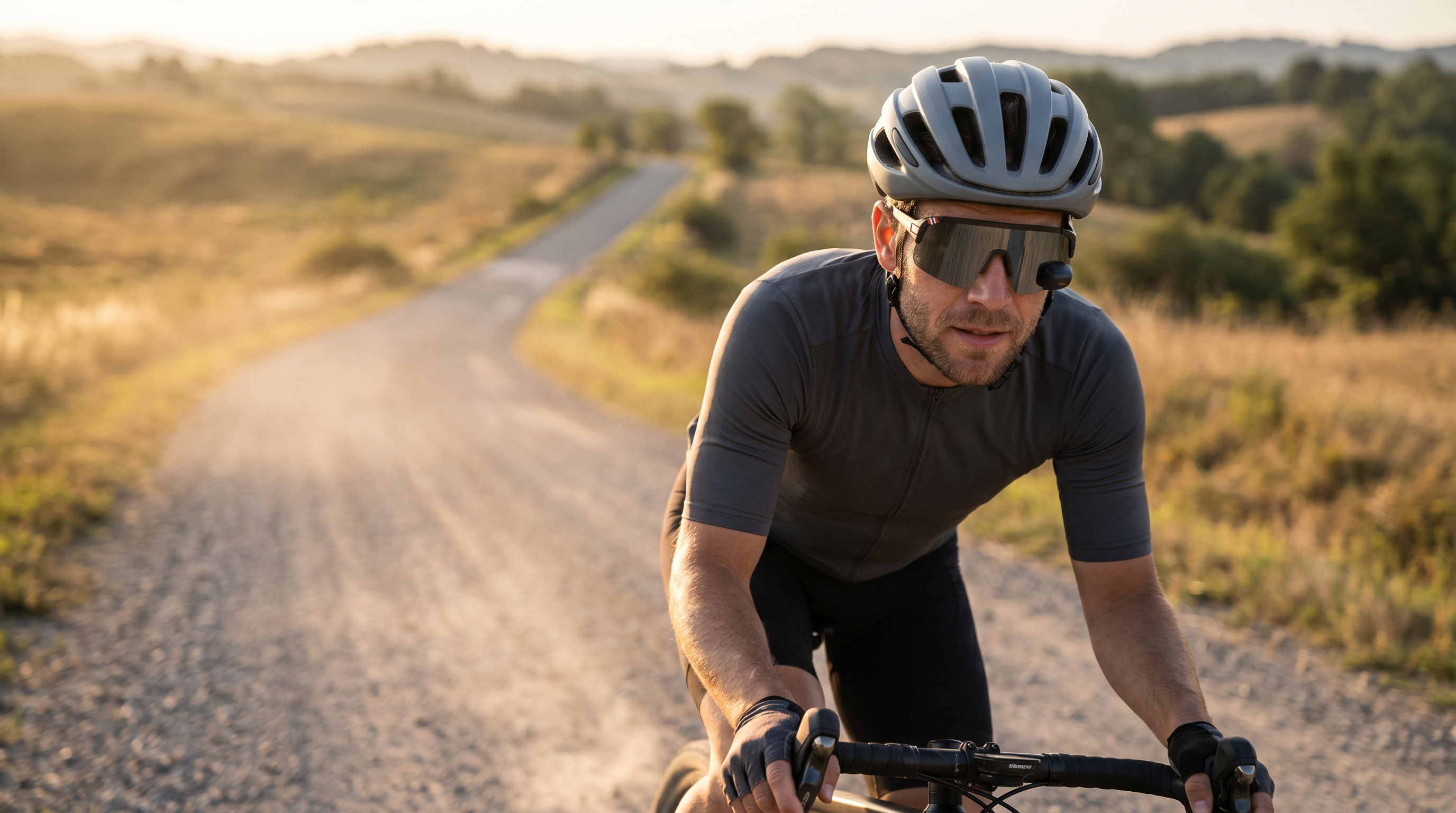
Gravel e asfalto condividono un unico obiettivo — sapere cosa c'è dietro di te — ma lo raggiungono in modo diverso. Sul ghiaino sciolto le mani e gli occhi sono impegnati a tenere la bici in equilibrio, quindi girare la testa è più rischioso che sull'asfalto liscio. Sulle strade rurali veloci che collegano i tratti sterrati, le auto ti raggiungono in fretta e in silenzio. Uno specchietto retrovisore copre entrambe le superfici: trasforma il giro di testa in una semplice occhiata, così gli occhi restano sul terreno davanti a te.
La maggior parte delle uscite gravel non è davvero un'unica uscita. Sono tre o quattro cucite insieme: uno sterrato doppio e scorrevole nel bosco, una carrareccia dissestata, un tratto veloce di asfalto di campagna per collegare il settore successivo, magari qualche centinaio di metri nel centro di un paese. Le gomme gestiscono la transizione senza problemi. Anche la tua attenzione deve cambiare — e il punto in cui i ciclisti dimenticano di farlo è esattamente quello che conta di più: la strada aperta tra i tratti off-road.
Il gravel richiede un approccio diverso alla consapevolezza rispetto alla strada?
Sì — non più grande, ma più flessibile. Il gravel cambia continuamente il fondo sotto di te, e ogni superficie cambia quanto puoi permetterti di distogliere l'attenzione da ciò che hai dietro.
Su una bici da strada ti assesti su lunghi tratti di asfalto prevedibili. La traiettoria è stabile, le mani sono rilassate e puoi permetterti qualche occasionale sguardo dietro la spalla. Il gravel non ti lascia mai assestare così. Un momento stai scivolando su fondo compatto, quello dopo stai scegliendo la linea tra i solchi, frenando davanti a un cancello o tenendo una traiettoria nervosa su pietre sciolte. Gli occhi sono fissi sui pochi metri davanti a te perché è lì che si nasconde la prossima sorpresa. Questo è il paradosso del gravel: sembra più sicuro perché c'è meno traffico, ma ti ruba proprio quei momenti liberi che normalmente useresti per controllare dietro. La soluzione non è guardare indietro più spesso. È fare in modo che guardare indietro costi quasi nulla.
TriEye nasce esattamente da quel tipo di avvicinamento invisibile da dietro. Il fondatore Carsten Juell Fongen stava pedalando sulle montagne norvegesi quando suo figlio gli è andato addosso da dietro — una caduta dalla direzione che nessuno dei due riusciva a vedere. Lo specchietto che è diventato The View è stata la risposta a quel punto cieco, e sulle uscite miste il punto cieco è più affollato che mai.
Perché girare la testa è più rischioso sul gravel?
Perché girare la testa sterza leggermente la bici, e su un fondo sciolto questo è un ottimo modo per perdere il controllo. Torcersi per guardare indietro sposta il peso e spinge la ruota anteriore — nessun problema sull'asfalto con buona aderenza, molto più insidioso sul gravel.
Sull'asfalto, il mezzo secondo che passi a guardare oltre la spalla ti costa al massimo una leggera deriva verso la riga bianca. Sul gravel, lo stesso movimento ha conseguenze diverse. Lo pneumatico anteriore ha meno grip da offrire, quindi il piccolo input di sterzo del tuo busto può rompere la trazione o trascinarti in un solco che non avevi visto. Aggiungi la maneggevolezza più nervosa di una gravel bike a bassa velocità, le borse da bikepacking cariche, o le braccia stanche dopo sessanta chilometri, e il semplice giro di testa diventa una delle cose più rischiose che fai nell'intera giornata. Stai scambiando la consapevolezza di ciò che hai dietro con il controllo di ciò che hai sotto — e sul gravel, il controllo è l'ultima cosa che puoi permetterti di perdere.
Cosa cambia sui tratti asfaltati tra un settore gravel e l'altro?
I tratti di collegamento su asfalto sono dove vive il vero rischio traffico. Le strade rurali tranquille portano meno auto, ma quelle che passano lo fanno più velocemente e con meno spazio — e ti stanno raggiungendo da dietro.
È facile rilassarsi sulle strade di collegamento perché sembrano vuote. I dati dicono di non farlo. Uno studio del 2024 sulla sicurezza dei ciclisti ha rilevato che il 94% delle collisioni in ambiente rurale avveniva a velocità superiori a 50 km/h, contro impatti a velocità molto più basse in città. Meno auto, ma ognuna porta con sé più energia. I tamponamenti restano una minoranza degli incidenti complessivi — circa il 10% degli incidenti gravi e mortali in bicicletta, con incroci e svolte che dominano le statistiche — ma un impatto veloce da dietro su una strada aperta è sia il più grave sia quello che non riesci a vedere arrivare. Uno specchietto non cambia le probabilità di un incidente. Elimina la direzione cieca e l'inquietudine che ti accompagna lungo tutto il percorso.
Anche gli automobilisti hanno le loro responsabilità. Il codice della strada britannico è esplicito: i conducenti devono "lasciare almeno 1,5 metri quando sorpassano i ciclisti a velocità fino a 30 mph, e dare loro più spazio quando sorpassano a velocità superiori" (Regola 163). Molti non lo fanno. Vedere un sorpasso che si sviluppa nello specchietto — per tempo, mentre hai ancora modo di tenere la traiettoria o spostarti verso il bordo — vale molto di più che scoprirlo mentre sta già accadendo.
Come aiuta uno specchietto retrovisore su ogni superficie?
Uno specchietto ti dà consapevolezza posteriore senza togliere gli occhi dal fondo davanti a te — l'unica cosa che scarseggia sul gravel ed è preziosa su strada. Una sola occhiata, occhi avanti, bici stabile.
L'approccio di TriEye mette lo specchietto dove i tuoi occhi già guardano. The View è un occhiale a lente unica con un piccolo specchietto retrovisore integrato nella lente stessa — non agganciato al casco o al manubrio, dove il gravel corrugato trasforma il riflesso in una sfocatura inutile. Poiché si muove con la testa, l'immagine resta stabile sia che tu stia rimbalzando su un fondo a lavagna che filando su asfalto liscio. Abbassi lo sguardo per una frazione di secondo, registri cosa c'è dietro, e sei già di nuovo sulla tua traiettoria. È la differenza tra un giro di testa e una semplice occhiata.
Lo specchietto è posizionato su un lato di quella lente unica — a sinistra o a destra per chi lo indossa. Una configurazione singola viene fornita con lo specchietto più piccolo; una configurazione doppia porta lo specchietto più grande su entrambi i lati per un campo visivo posteriore più ampio. Nulla è definitivo al momento dell'acquisto — le lenti TriEye si cambiano facilmente, così puoi variare la tinta in base alle condizioni o passare a uno specchietto più grande in seguito. Per le giornate miste che alternano campi aperti e luminosi a boschi in ombra, questa intercambiabilità conta quanto lo specchietto stesso; la nostra guida alle lenti spiega quale tinta si adatta a quale luce.
Come si imposta la consapevolezza per un'uscita su superfici miste?
Adatta le tue abitudini alla superficie: scansiona di più su strada, fidati della tua traiettoria sul gravel, e lascia che lo specchietto si occupi della sorveglianza posteriore su entrambe. Ecco come cambiano le priorità tratto per tratto.
| Superficie | Rischio principale | Dove vanno gli occhi | Come gestire la sorveglianza posteriore |
|---|---|---|---|
| Gravel liscio / fondo compatto | Altri utenti del percorso, solchi improvvisi | Pochi metri avanti | Occhiata occasionale allo specchietto; nessun bisogno di girarsi |
| Gravel sciolto / tecnico | Perdere trazione girando la testa | Fissi sulla traiettoria | Solo specchietto — non torcersi mai su fondo sciolto |
| Asfalto rurale di collegamento | Sorpassi veloci da dietro | Avanti, con controlli posteriori regolari | Scansiona lo specchietto ogni 5–10 secondi |
| Centro urbano / paese | Incroci, portiere, traffico in svolta | Ovunque — massima allerta | Specchietto prima di ogni manovra; segnala chiaramente |
La crescita del gravel sta cambiando il quadro della sicurezza?
Il gravel è uno dei segmenti del ciclismo in più rapida crescita, il che significa che sempre più ciclisti trascorrono sempre più tempo esattamente sulle superfici miste dove le abitudini di consapevolezza contano di più. Più ciclisti sulle strade tranquille è una buona notizia — e un buon motivo per percorrerle bene.
I dati di Strava mostrano che il boom del gravel non dà segni di rallentamento, con il gravel tra le categorie di attività in maggiore crescita nei report recenti. Sono tante persone che scoprono la gioia delle strade secondarie deserte e dei tratturi — e scoprono anche che quei percorsi includono quasi sempre qualche chilometro esposto di asfalto aperto. I ciclisti che restano rilassati in quei tratti non sono quelli che ignorano il traffico. Sono quelli che sanno sempre dove si trova. Per un quadro più completo di perché la consapevolezza posteriore conta in ogni tipo di uscita, la nostra guida completa alla sicurezza in bicicletta e il nostro articolo sulla consapevolezza situazionale in sella approfondiscono ulteriormente.
Domande frequenti
Uno specchietto retrovisore è più utile sul gravel o su strada?
Su entrambi, per ragioni diverse. Sul gravel ti risparmia il rischioso giro di testa su fondo sciolto; sulle strade rurali tra un settore e l'altro ti permette di individuare per tempo i sorpassi veloci. Poiché la maggior parte delle uscite gravel attraversa entrambe le superfici, uno specchietto si guadagna il suo posto sull'intera uscita, non solo su una parte.
Lo specchietto non vibra troppo sul gravel tecnico per essere leggibile?
Uno specchietto montato sul manubrio o sul casco può sfuocarsi sui fondi corrugati, perché è fissato a qualcosa che vibra. Lo specchietto di The View è integrato nella lente, quindi si muove con la testa anziché con la bici — il riflesso resta molto più stabile sulle superfici irregolari.
Meglio uno specchietto singolo o doppio per il gravel?
La maggior parte dei ciclisti è soddisfatta di uno specchietto singolo sul lato dominante, sia su strada che su gravel. La configurazione doppia monta lo specchietto più grande su entrambi i lati della lente per un campo visivo posteriore più ampio. Non è una scelta definitiva — le lenti TriEye si cambiano facilmente, così puoi passare a uno specchietto più grande in seguito se vuoi più copertura. Consulta la nostra guida singolo vs doppio.
Lo specchietto sostituisce completamente il giro di testa?
No — consideralo il tuo primo livello di consapevolezza, non l'unico. Lo specchietto copre la sorveglianza posteriore continua senza destabilizzare la bici, ma per una manovra impegnativa come attraversare una corsia potresti comunque voler dare un'ultima occhiata diretta quando il fondo lo consente. Lo specchietto fa sì che tu lo faccia molto meno spesso, e mai su fondo sciolto.
Posso usare gli stessi occhiali per gravel, strada e pendolarismo?
Sì. The View funziona su tutte le superfici e discipline, e poiché le lenti sono intercambiabili puoi adattare la tinta alla giornata — più scura per il gravel aperto e luminoso, più chiara per i boschi in ombra o le giornate grigie in città. Un solo paio, cambi la lente, tieni lo specchietto.

