

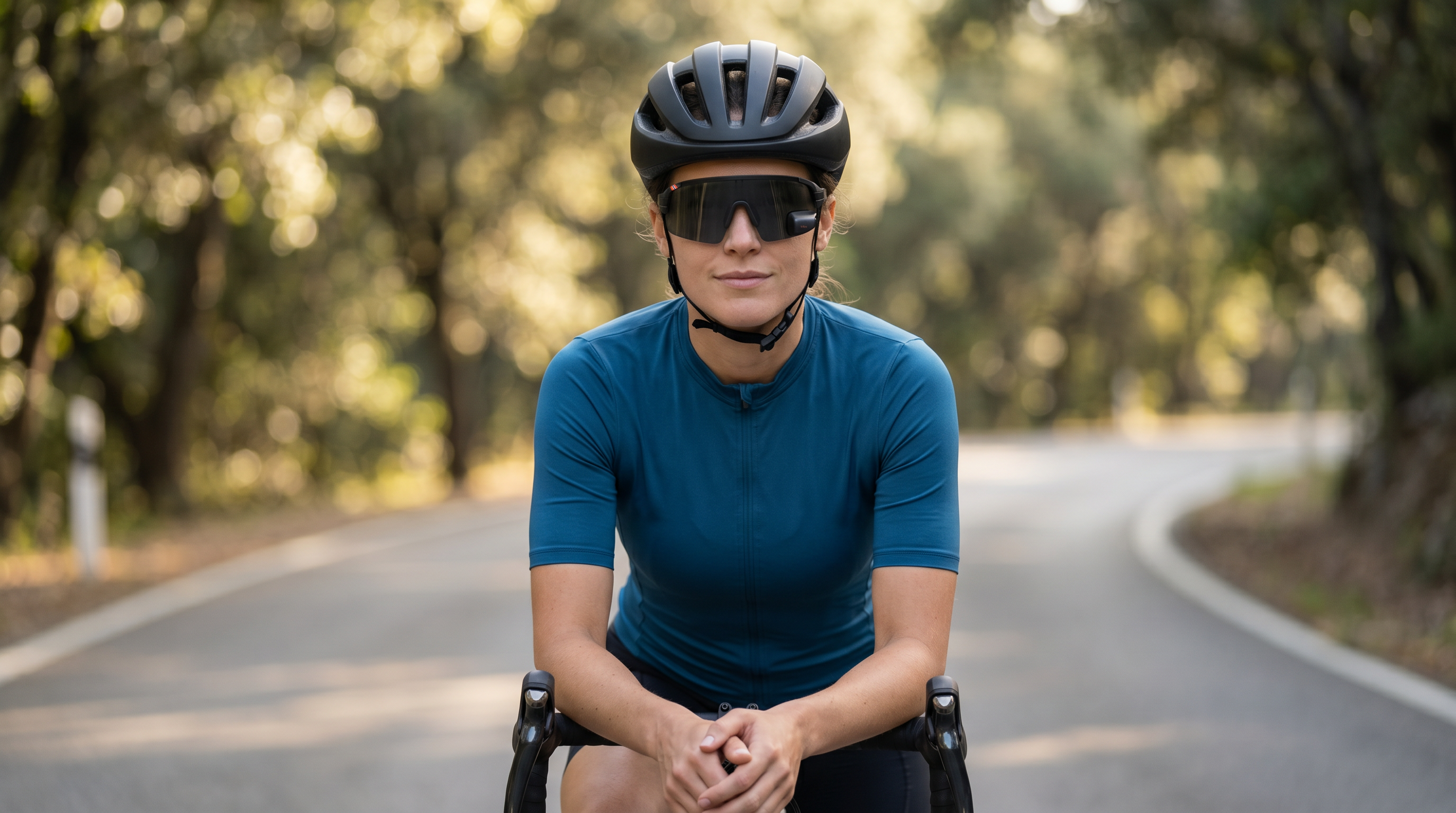
Cycling is a safe, healthy way to get around — but plenty of women feel less safe than the numbers say they are. Closing that gap is mostly about confidence and awareness, not nerve. Ride a route you trust, kit up so you're easy to see, and give yourself a way to know what's behind you without turning your head. Awareness is the thing that turns the jitters into control.
There's a moment a lot of women riders know well. You're rolling along, feeling good, and then you hear a car somewhere behind you — close, or maybe not, you can't quite tell — and your shoulders tense up. You want to look back. You also know that looking back means a wobble, a drift toward the white line, a second of riding half-blind. So you just... hope. That little knot of not-knowing is what this guide is about, because it's fixable. Let's talk about what actually makes women safer on a bike, and what just makes the ride less fun.
Is cycling safe for women?
Yes. Cycling is statistically safe and one of the best things you can do for your health — but women often feel less safe than the data warrants, and that gap between feeling and fact is where the real work is.
Here's the honest version: the risks of riding are real but small, and they drop further with good habits and good kit. What's larger, and more under-discussed, is the perception of risk — the sense of exposure, especially riding solo, in low light, or with traffic you can't see behind you. That feeling is valid. It's also something you can shrink, deliberately, with a few practical choices. The goal isn't to ride scared. It's to ride informed, because an informed rider is a calm one.
Why do fewer women cycle?
Fewer women ride largely because of how unsafe the roads feel, not because of fitness or interest — and that perception is built on real experiences, not imagination.
The gap is stark. In the UK, men make about 72% of all bike trips and women just 28%, according to Cycling UK. When women are asked what's holding them back, the answer isn't lycra or hills — it's traffic. Survey after survey puts protected space from cars at the top of the list of what would get more women riding. This isn't a confidence problem in the patronising sense. It's a rational response to feeling exposed on roads built around cars.
The encouraging part: the things that close the gap are mostly within your control as a rider, today, regardless of whether your town has built a single new bike lane. Route choice, visibility, positioning, and awareness all move the needle — and they compound.
What's really behind the nerves?
A lot of the unease is about the unseen — what's coming up behind you. Remove the blind direction, and a surprising amount of the anxiety goes with it.
And women aren't imagining the close calls. In a Hennepin County study analysed by researchers at the University of Minnesota's Humphrey School, drivers passed female cyclists noticeably closer than male ones. As the researchers put it: "Statistical modeling showed that, other factors equal, the female cyclist was 3.8 times more likely to be encroached upon" — that is, passed closer than a metre (University of Minnesota Gender Policy Report). You can't control how a stranger drives. You can control whether that car is a surprise.
That's the whole idea behind TriEye. Founder Carsten Juell Fongen was cycling in the Norwegian mountains when his own son crashed into him from behind — the one direction he couldn't see. Being hit from behind is the scenario riders fear most precisely because it's unseen. Take away the blindness and you take away most of the fear with it.
What gear actually builds confidence?
The gear that helps most does two things: makes you easier to see, and makes you more aware of what's around you. Everything else is comfort.
| Gear | What it does | Why it builds confidence |
|---|---|---|
| Front & rear lights (day and night) | Make you visible to drivers from both directions | You're seen earlier, so cars react sooner |
| Bright or reflective layers | Help you stand out in glare, rain, and dusk | Less guessing about whether you've been noticed |
| A rear-view mirror (e.g. The View) | Lets you monitor traffic behind without turning your head | Removes the blind direction — no more guessing what's back there |
| A bell or clear voice | Signals your presence to pedestrians and riders | You set the terms of a shared path |
| A shared route or check-in | Someone knows where you are on solo rides | Peace of mind on early or quiet rides |
Notice what's not on the list: nothing about being faster, fitter, or kitted out in the latest anything. Confidence is built from being visible and being aware, full stop.
How does a rear-view mirror keep your eyes forward?
A rear-view mirror lets you watch traffic approaching from behind without turning your head or drifting off your line — the glance costs you nothing.
TriEye builds a small mirror right into the lens. The View has one curved shield lens, with a thumbnail-sized mirror on the wearer's-left or right side of that lens — left being the usual choice, since it faces the traffic side on most roads. Flick your eyes to it and you see what's behind you in a fraction of a second, eyes still pointed up the road, bike still tracking straight. No shoulder check, no wobble, no blind second.
You're not locked into one setup, either. Prefer mirrors on both sides? That's the dual version, with a slightly larger mirror. Want to change the tint for darker mornings or bright afternoons? TriEye lenses swap easily, so the glasses grow with how and where you ride. Pair the mirror with good lights and you've got two layers of awareness — one that helps drivers see you, one that helps you see them. For the bigger picture on staying aware in traffic, see our guide to situational awareness on the bike, and if you're still weighing whether a mirror is for you, start with do you need a rear-view mirror for cycling.
To be clear about what it does and doesn't do: a mirror helps you see what's coming. It won't ride the bike for you or prevent a crash. What it removes is the surprise — and for a lot of riders, the surprise is the scary part.
How can I ride with more confidence, starting now?
Confidence comes from small, repeatable habits — known routes, predictable positioning, and tools that keep you informed — not from waiting until you feel brave.
A few things that genuinely help:
• Pick a route you know and like first — familiarity is half of confidence. Build from there.
• Ride a predictable line, roughly a door's width from parked cars, and hold it. Drivers respect a rider who looks decisive.
• Use lights every ride, even in daylight. You're not being cautious; you're being obvious.
• Build the mirror habit on quiet roads — a glance every ten seconds or so — until checking behind feels as natural as checking a mirror in a car.
• On solo or early rides, share your route or live location with someone. It's not paranoia; it's just sensible.
None of this is about being fearless. It's about stacking small advantages until the ride feels like yours again — eyes up, shoulders down, in control of the bit of road around you.
FAQ
Is cycling safe for women?
Yes — cycling is statistically safe and great for your health. Women often feel less safe than the numbers suggest, usually because of traffic and the sense of being exposed. Good habits, visible kit, and a way to see behind you close most of that gap.
What's the best safety gear for women cyclists?
Start with front and rear lights, bright or reflective layers, and a way to monitor traffic behind you — a rear-view mirror like The View keeps your eyes forward. A bell and a shared route round it out. The priorities are being seen and being aware, not being fast.
How can I feel more confident cycling alone?
Begin on routes you know, ride a predictable line, use lights every time, and share your location on solo rides. Removing the blind spot behind you with a mirror helps too — most of the unease on quiet roads is about not knowing what's coming from behind.
Do rear-view mirrors really help on a bike?
They do, by turning a risky shoulder check into a quick glance. With a mirror built into the lens, you see traffic approaching from behind without turning your head or drifting off your line. It helps you see what's coming — it doesn't replace careful riding.
Should I ride quiet routes or stick to main roads?
Whichever you ride with confidence and good awareness. Quieter routes can feel calmer; main roads can be more predictable and better lit. Either way, the same kit applies — lights, visible layers, and a mirror so traffic behind you is never a surprise.

